
Zinc-Nickel Plating (Zn-Ni)
Zinc-nickel alloy electroplate for fasteners — 12–16% nickel alloy at roughly 8–14 µm, up to 1,000 hours neutral salt spray, stable to 300 °C+, the established cadmium replacement.
Last updated: 2026-11
Specifications
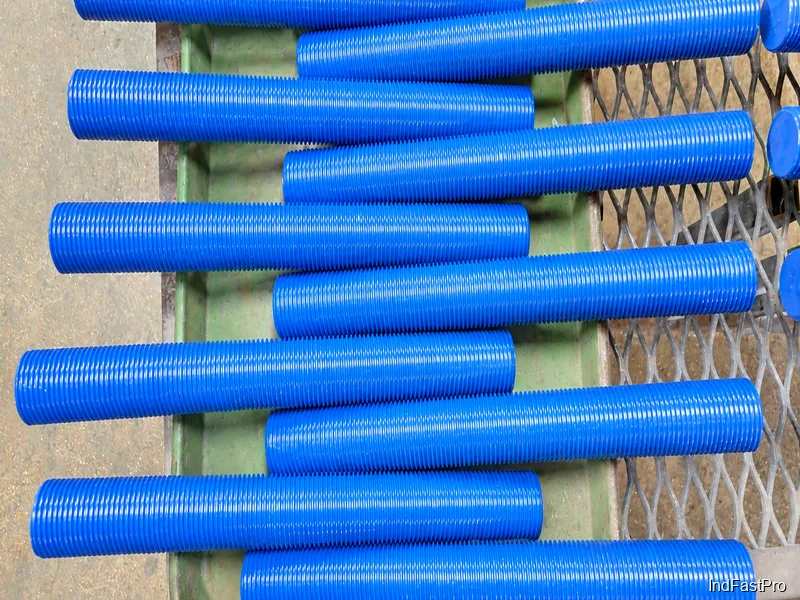
Zinc-nickel is the alloy electroplate specified where plain zinc is consumed too fast: automotive underbody and engine-bay hardware, marine and coastal assemblies, aerospace and defense components replacing cadmium. The 12–16% nickel alloy corrodes several times more slowly than pure zinc at comparable thickness, holds up to sustained heat that degrades plain zinc, and — with a trivalent passivate — meets RoHS compliance. Because it is still an electroplate, hardened parts are baked after plating to manage hydrogen embrittlement.
| Process | Electroplated zinc-nickel alloy |
|---|---|
| Alloy composition | 12–16% nickel, balance zinc |
| Typical coating thickness | 8–14 µm alloy layer, plus trivalent passivate (0.06–0.15 µm) and optional topcoat (0.5–4 µm) |
| Corrosion resistance | Up to 1,000 hours to red rust (neutral salt spray, sealed systems 1,200+ hours); roughly 3–6× standard zinc at equal thickness |
| Heat resistance | Stable to 300 °C+ in many applications (plain zinc degrades above ~150 °C) |
| Hardness | 250–500 HV |
| Appearance | Typically black trivalent passivate; clear also available |
| Compliance | RoHS compliant with trivalent passivate; specified cadmium replacement |
| Hydrogen embrittlement | Electroplated process — post-plate bake required for hardened parts |
Where this grade fits
Zinc-nickel is the choice where both corrosion hours and thread fit matter: 8–12 µm reaches 700–1,000 salt-spray hours to red rust while holding original thread tolerances — territory hot-dip galvanizing cannot reach without overtapping the nut. Low-embrittlement formulations still require qualification testing and baking on hardened parts; the coating label alone does not close the risk.
Deep read: Zinc-Flake vs Zinc-Nickel for High-Strength Fasteners: What the Evidence Settles on Hydrogen, Salt Spray, Friction and Specs · Hydrogen Embrittlement in High-Strength Bolts: Which Grades Need Controls, Which Coatings and Baking Schedules Are Acceptable, and What to Require Before the RFQ
Materials
- Carbon steel fasteners
- Alloy steel fasteners
- Case-hardened steel fasteners
Ordering & documentation
Documents
Shipments are backed by Mill Test Certificate (MTC), Dimensional Report, Salt Spray Test Report on request, with full batch traceability from raw material to finished product. Quality management follows the owner-confirmed compliance list: ISO 9001:2015, RoHS, REACH. Exact document sets are confirmed on the order.
Quotation
- The fastener family (Zinc-Nickel Plating (Zn-Ni)) plus the standard designation from your drawing — DIN / ISO / JIS / ASTM / ANSI, or a drawing for custom parts.
- Size (diameter and length), thread type (metric or inch), property class or grade, and coating or finish.
- Quantity per size and your target delivery date.
- Destination country, and any required documents (for example a mill test certificate) so the quote includes them.
Sample & supply
Minimum order quantity is per batch, carried with the fastener order. Finishing run adds 5–10 days to the fastener lead time. Quantities or variants outside the standard range are confirmed at quotation.
Storage & shipping
Parts are packed for export and shipped factory-direct to buyers in Europe, Asia, the Americas and the Middle East. Store fasteners dry and protected until installation, and keep coated parts in their packaging until use; specific packing and preservation requirements can be stated on the order and confirmed at quotation.
Frequently asked questions
When is zinc-nickel worth the premium over standard zinc?
Where exposure or consequences justify a 2–4× coating cost: constant road salt or de-icing exposure, marine and coastal salt air, service above ~150 °C, assemblies against aluminum where galvanic risk matters, or OEM specifications that mandate it outright. For indoor parts or short service life, standard zinc per ASTM B633 remains the correct call — the finish should follow the part's environment, not blanket policy.
What is the MOQ and lead time for this finish?
Finishing runs per batch carried with the fastener order and adds 5–10 days to the fastener lead time. Coated parts follow the finish line that processes them, so confirm the exact schedule against quantity and finish class at quotation.
What should an RFQ for this finish state?
State the base fastener (grade, diameter, length), the coating standard and class (for example ASTM B841 Class 2 with black trivalent passivate, or ISO 10683 with a specified topcoat), any thickness or salt-spray requirement, lubrication or torque-tension needs, and quantity per size — plus destination country and required documents such as a mill test certificate.
Related knowledge
- Reading a Fastener Coating Callout: ISO 10683 Designations, Salt-Spray Hours and What to Confirm With the Plater
- Zinc-Plated vs Hot-Dip Galvanized Fasteners: Which Coating for Which Environment
- Zinc-Flake Coating for Fasteners: When the Evidence Supports It, and What to Verify at the Coater
- Zinc-Flake vs Zinc-Nickel for High-Strength Fasteners: What the Evidence Settles on Hydrogen, Salt Spray, Friction and Specs
- Zinc-Flake vs Zinc-Nickel for High-Strength Fasteners: What the Evidence Settles on Hydrogen, Salt Spray, Friction and Specs
- Reading a Fastener Coating Callout: ISO 10683 Designations, Salt-Spray Hours and What to Confirm With the Plater
Request a Quote
Get factory-direct pricing from the manufacturer.
What to include in your inquiry
- ✓ Standard and property class (e.g. DIN 912, ISO 4762, class 8.8) — or a drawing for custom parts.
- ✓ Sizes, lengths and thread type (metric or inch).
- ✓ Quantity per size and your target delivery date.
- ✓ Destination country, plus any coating or finish requirement.
- ✓ Any documents you need with the shipment (e.g. mill test certificate) so the quote includes them.
- ✓ Your inquiry goes straight to the factory team by email and gets a reply within 24 hours.
- ✓ Factory-direct pricing
- ✓ Standard and custom specifications
- ✓ Factory-direct export to buyers in Europe, Asia, the Americas and the Middle East
- ✓ Full fastener family support