
Surface Finishes & Coatings
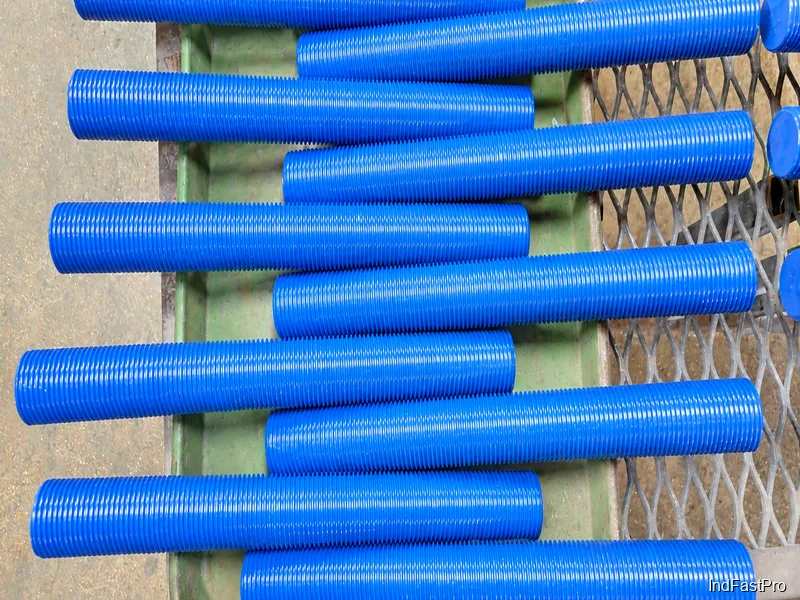
A comparison of common steel fastener finishes including zinc flake, phosphate & oil, cadmium electroplate, and zinc electroplate, with their corrosion resistance, friction, and hydrogen embrittlement characteristics.
Last updated: 2026-11
Specifications
Current supplyable range — owner-confirmed scope of supply; requirements outside this range are confirmed per quotation.
| moq | per batch (carried with fastener order) |
|---|---|
| lead time | +5-10 days per batch (with fastener order) |
| price from | quoted per batch/ton (no unit price published) |
| max temperature | electro-galvanized post-treatment <=80°C; Dacromet/Dacro curing ~300°C; phosphating 60-90°C |
Materials
- steel
Selection guidance
Why finishes are specified, how the common coating systems compare, and what the hot-dip galvanizing standards actually require of an order.
The trade-off: cost versus corrosion resistance
Surface finishes are applied to steel bolts and screws primarily to improve corrosion resistance. Each finish offers a different level of it, and typically the higher the corrosion resistance, the more the finish costs. Resistance is measured with a standard neutral salt spray test (NSS) specified in standards such as ASTM B117 or ISO 9227: parts are exposed to salt spray in a chamber for a stated number of hours, then visually examined.
One manufacturer’s relative comparison of the five finishes it ships most (cost indexed to its own volume; hours are typical NSS ranges) shows the spread: zinc phosphate & oil at index 1 with 2–72 hours; zinc electroplate at 2 with 72–384 hours; zinc-nickel at 6 with ~1000 hours; cadmium at 9 with 72–168 hours; zinc flake at 12 with 240–1000 hours. Treat the cost indexes as order-of-magnitude guidance — they vary with volume — but the hours column is a usable first filter for matching a finish to the environment the fastener will actually see.
The five finishes buyers specify most
Zinc phosphate & oil is a liquid bath chemical conversion process followed by a protective oil. It is the lowest-cost option, gives a thin black coating suitable for handling, packing, storage and everyday dry ambient conditions, slightly increases lubricity, and carries a very low hydrogen-embrittlement risk for hardened parts.
Zinc electroplate is the cathodic deposition of zinc from an ionic solution. It is versatile: thinner coatings suit dry indoor conditions, thicker layers wet outdoor and saline exposure. Its surface is moderately rough, which decreases lubricity relative to plain steel — sealers and lubricants exist to recover both lubricity and corrosion resistance. Its known downside is hydrogen embrittlement on hardened high-strength parts: hydrogen is produced at the steel surface during electroplating, so plating specifications include post-plate baking, which can run 24 hours or more depending on thickness (ASTM B850 is the reference).
Zinc-nickel electroplate consists of an 8–14 µm layer of 12–16% nickel alloy next to the steel, topped with a trivalent passivate and a top coat. It offers corrosion resistance up to 10× conventional zinc plus wear resistance, and has gained popularity as the less-toxic alternative to cadmium that automotive and military vehicle designers are migrating to under new regulations.
Zinc flake is applied non-electrolytically (dip-spin or spray, then cured), so it avoids the plating-bath hydrogen exposure entirely, and reaches 240–1000 salt-spray hours. Cadmium electroplate, once specified extensively on commercial and military fasteners, has been virtually eliminated from commercial products because of its toxicity and removed from new military design; the remaining customer calls it sees are legacy AMS QQ-P-416 requirements.
Hot-dip galvanizing: A153 and F2329 are not interchangeable callouts
Both ASTM A153 and ASTM F2329 govern hot-dip galvanizing of centrifuged hardware — the spin step that keeps threads free of excess zinc. The difference is not the process but the rigor of the quality framework: F2329 was written specifically for fasteners and layers additional requirements on top of an A153-like base. If F2329 is on the order, the lot type must be explicitly stated — batch lot or production lot (with Detection/ Prevention process types under F1470) — because ambiguity defaults the supplier to a fixed sample size and can create certification gaps at delivery.
F2329 adds requirements A153 does not have: mandatory stout-knife adhesion testing on every batch lot (A153 tests only on visible evidence of a problem); higher coating thickness for fasteners and nuts 3/8 inch and under (1.5 mils average vs A153’s 1.4) and, most significantly, for Grade A394 bolts under Supplementary Requirement 1 (2.8 mils average vs 2.1 under A153 Class C); water quenching of all parts unless the customer specifies air cooling; recorded average bath temperature communicated to the customer; and a more complete certification package at delivery.
Two practical notes for buyers. First, appearance: lumpiness, dullness, matte gray areas or minor color non-uniformity are not defects under either standard — rejecting compliant parts on cosmetic variation is a documented field failure mode. Second, embrittlement: both standards prevent it the same two ways (baking after chemical cleaning before galvanizing, or abrasive blasting with flash cleaning), but their embrittlement test methods differ (A143 Paragraph 9 vs F606 wedge), so lab capability should be confirmed before specifying F2329 on high-strength fastener orders.
Thickness classes and the thread-fit bill
Coating thickness is where corrosion protection and thread fit pull against each other. Electroplated zinc is specified by service class (ASTM B633 SC1–SC4 across roughly 5–25 µm), and the passivate counts as much as the microns — the same 12 µm zinc plate moves from around 200–240 salt-spray hours to red rust with a yellow passivate to 480+ hours when a sealer is added. The most commonly cited specification error is ordering an indoor class (SC2, 8 µm) for parts that will see an outdoor, wet environment (SC3): the per-part saving is fractions of a cent against a failure cost orders of magnitude larger.
Hot-dip galvanizing sits five to ten times thicker (roughly 40–60 µm after centrifuging, up to 86 µm on larger diameters), which is why it outlasts electroplate outdoors — and why the thread system changes: hot-dip galvanized threads are feasible from about M8 upward, and coated nuts are re-tapped to oversize 6AZ/6AX tolerance classes to run free on the galvanized bolt. The thin-film systems buy corrosion hours without that bill: zinc-nickel at 8–12 µm reaches 700–1,000 hours to red rust and zinc flake at 8–20 µm reaches 500–2,000+ hours, both while holding original thread tolerances. One caveat carries across every system: the same coating name can hide different alloy, thickness and sealer, so qualify the system, not the label.
Ordering & documentation
Documents
Shipments are backed by Mill Test Certificate (MTC), Dimensional Report, Salt Spray Test Report on request, with full batch traceability from raw material to finished product. Quality management follows the owner-confirmed compliance list: ISO 9001:2015, RoHS, REACH. Exact document sets are confirmed on the order.
Quotation
- The fastener family (Surface Finishes & Coatings) plus the standard designation from your drawing — DIN / ISO / JIS / ASTM / ANSI, or a drawing for custom parts.
- Size (diameter and length), thread type (metric or inch), property class or grade, and coating or finish.
- Quantity per size and your target delivery date.
- Destination country, and any required documents (for example a mill test certificate) so the quote includes them.
Sample & supply
Minimum order quantity is per batch, carried with the fastener order. Finishing run adds 5–10 days to the fastener lead time. Quantities or variants outside the standard range are confirmed at quotation.
Storage & shipping
Parts are packed for export and shipped factory-direct to buyers in Europe, Asia, the Americas and the Middle East. Store fasteners dry and protected until installation, and keep coated parts in their packaging until use; specific packing and preservation requirements can be stated on the order and confirmed at quotation.
Coating processes
Each coating process has its own specification page — coating system, corrosion performance and RFQ guidance per process.
Frequently asked questions
Zinc flake or zinc electroplate — how do I choose?
Zinc flake is applied non-electrolytically, so it avoids the hydrogen-embrittlement exposure that electroplating creates on hardened high-strength parts, and it reaches the longer salt-spray ranges. Zinc electroplate is the lower-cost versatile choice for less aggressive exposure. Name the part hardness and the corrosion target (salt-spray hours if specified) on the RFQ and the quote confirms the system.
How many salt-spray hours should I specify?
Hours are a first filter, not a guarantee: published specification requirements range from a few hours for phosphated-and-oiled parts to several hundred for zinc flake and zinc-nickel systems. Specify the environment the fastener will actually see — or the exact standard and thickness class if your drawing names one (for example ASTM B633 or GMW3179) — rather than the highest number available.
What should a coating RFQ state?
The fastener the finish applies to, the coating system or the target corrosion resistance, any governing standard with its thickness class, and the test report you need at delivery (salt spray test reports are among the standard documents). Coatings outside the owner-confirmed list are confirmed at quotation.
Related knowledge
- Reading a Fastener Coating Callout: ISO 10683 Designations, Salt-Spray Hours and What to Confirm With the Plater
- Zinc-Plated vs Hot-Dip Galvanized Fasteners: Which Coating for Which Environment
- Zinc-Flake Coating for Fasteners: When the Evidence Supports It, and What to Verify at the Coater
- Zinc-Flake vs Zinc-Nickel for High-Strength Fasteners: What the Evidence Settles on Hydrogen, Salt Spray, Friction and Specs
Request a Quote
Get factory-direct pricing from the manufacturer.
What to include in your inquiry
- ✓ Standard and property class (e.g. DIN 912, ISO 4762, class 8.8) — or a drawing for custom parts.
- ✓ Sizes, lengths and thread type (metric or inch).
- ✓ Quantity per size and your target delivery date.
- ✓ Destination country, plus any coating or finish requirement.
- ✓ Any documents you need with the shipment (e.g. mill test certificate) so the quote includes them.
- ✓ Your inquiry goes straight to the factory team by email and gets a reply within 24 hours.
- ✓ Factory-direct pricing
- ✓ Standard and custom specifications
- ✓ Factory-direct export to buyers in Europe, Asia, the Americas and the Middle East
- ✓ Full fastener family support