
DIN 529 Masonry Bolts
DIN 529 masonry (foundation anchor) bolts, M8 through M72×6 — the source splits the dimension ladder into four diameter-range blocks; Type C = with split swivel.
Last updated: 2026-11
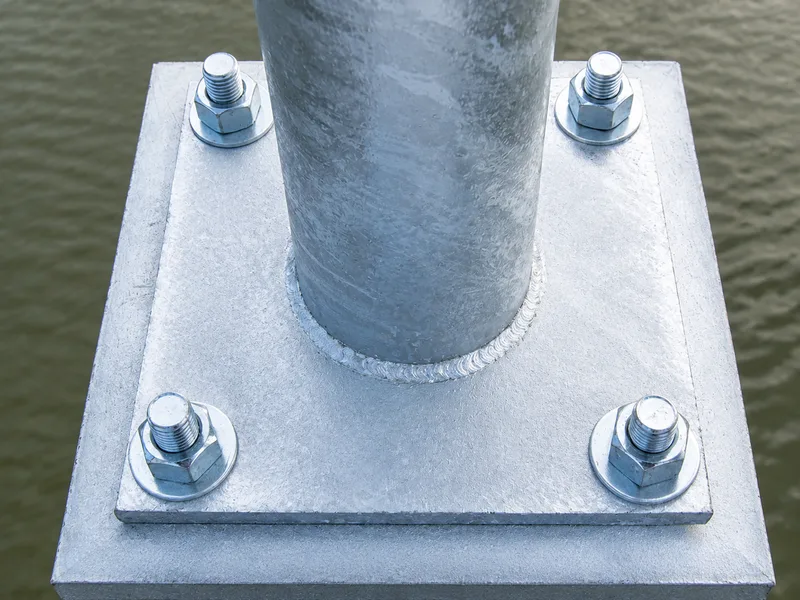
Specifications
DIN 529 covers the heavy masonry bolts that are cast or set into masonry and concrete to carry structural fixings — the anchor rod you embed first, everything else bolts to later. This reference tabulates the collected source's per-thread dimension ladder in the four diameter blocks as it prints them: M8–M16, M20–M30, M36–M48 and M56–M72×6, with the rows lettered a, c, g and b exactly as the source labels them (the source does not expand the letters into named features on the collected page, so we quote them as printed rather than guessing at the geometry — match the letters against your drawing before you order). Each lettered row carries its sub-rows where the source prints them: a and c split into Nominal Size / max / min, g prints an approx. row, b prints min = nominal size / max. Two things to read from the ladder rather than assume: the M56 / M64 / M72×6 block prints "/" in every a cell — the source gives no a values for the largest three sizes — and the g row is the only approx. dimension, so treat it as a milling/setting reference, not a tolerance. Material, coating and strength class are not on the collected grid and are quoted per RFQ against the drawing.
| Standard | DIN 529 masonry bolts (source note: Type C = with split swivel), as tabulated by the collected source |
|---|---|
| Thread sizes covered | M8, M10, M12, M16, M20, M24, M30, M36, M42, M48, M56, M64, M72×6 — in the source's four diameter blocks |
| Tabulated rows | a (Nominal Size / max / min), c (Nominal Size / max / min), g (approx.), b (min = nominal size / max) — letter-labeled as printed |
| Largest sizes | M56 / M64 / M72×6: a rows print "/" in the source (no values tabulated for those sizes) |
| Not tabulated | Material, strength class, coating, embedment lengths, swivel detail dimensions — per RFQ |
| Thread Size d | M8 | M10 | M12 | M16 | |
|---|---|---|---|---|---|
| a | Nominal Size | 16 | 20 | 24 | 32 |
| max | 19 | 23 | 27 | 35 | |
| min | 13 | 17 | 21 | 29 | |
| c | Nominal Size | 12 | 15 | 18 | 24 |
| max | 17 | 20 | 23 | 29 | |
| min | 7 | 10 | 13 | 19 | |
| g | ≈ | 5 | 7 | 8 | 11 |
| b | min=nominal size | 20 | 25 | 30 | 40 |
| max | 22.5 | 28 | 33.5 | 44 |
| Thread Size d | M20 | M24 | M30 | |
|---|---|---|---|---|
| a | Nominal Size | 40 | 48 | 60 |
| max | 43 | 51 | 63 | |
| min | 37 | 45 | 57 | |
| c | Nominal Size | 30 | 36 | 45 |
| max | 35 | 41 | 50 | |
| min | 25 | 31 | 40 | |
| g | ≈ | 14 | 18 | 24 |
| b | min=nominal size | 50 | 60 | 75 |
| max | 55 | 66 | 82 |
| Thread Size d | M36 | M42 | M48 | |
|---|---|---|---|---|
| a | Nominal Size | 72 | 85 | 98 |
| max | 75 | 88 | 101 | |
| min | 69 | 82 | 95 | |
| c | Nominal Size | 54 | 63 | 72 |
| max | 59 | 68 | 77 | |
| min | 49 | 58 | 67 | |
| g | ≈ | 30 | 34 | 40 |
| b | min=nominal size | 90 | 105 | 120 |
| max | 98 | 114 | 130 |
| Thread Size d | M56 | M64 | M72×6 | |
|---|---|---|---|---|
| a | Nominal Size | / | / | / |
| max | / | / | / | |
| min | / | / | / | |
| c | Nominal Size | 84 | 96 | 110 |
| max | 89 | 101 | 115 | |
| min | 79 | 91 | 105 | |
| g | ≈ | 45 | 50 | 60 |
| b | min=nominal size | 140 | 160 | 180 |
| max | 151 | 172 | 192 |
Materials
- Masonry bolts are supplied in plain carbon steel with the coating your specification names (plain, zinc-plated or hot-dip galvanized); the collected table tabulates geometry only, so strength class and coating certificates are quoted per RFQ against the drawing
Ordering & documentation
Documents
Shipments are backed by Mill Test Certificate (MTC), Dimensional Report, Salt Spray Test Report on request, with full batch traceability from raw material to finished product. Quality management follows the owner-confirmed compliance list: ISO 9001:2015, RoHS, REACH. Exact document sets are confirmed on the order.
Quotation
- The fastener family (DIN 529 Masonry Bolts) plus the standard designation from your drawing — DIN / ISO / JIS / ASTM / ANSI, or a drawing for custom parts.
- Size (diameter and length), thread type (metric or inch), property class or grade, and coating or finish.
- Quantity per size and your target delivery date.
- Destination country, and any required documents (for example a mill test certificate) so the quote includes them.
Sample & supply
Minimum order quantity is 500–1,000 pieces. Standard production run 15–30 days. Quantities or variants outside the standard range are confirmed at quotation.
Storage & shipping
Parts are packed for export and shipped factory-direct to buyers in Europe, Asia, the Americas and the Middle East. Store fasteners dry and protected until installation, and keep coated parts in their packaging until use; specific packing and preservation requirements can be stated on the order and confirmed at quotation.
Frequently asked questions
The table rows are lettered a, c, g, b — how do I read them against my drawing?
The source page labels the rows by letter only and does not expand them into named features, so the grid here is deliberately carried the same way — transcribed, not interpreted. The practical reading path: pull the letter labels from your DIN 529 drawing (each form letter-matches the row it dimensions), then read this table for the values at your thread size. If your drawing does not use DIN 529 letter labels, do not guess a substitution — send the drawing with the RFQ and quote from it, because the largest three sizes here (M56, M64, M72×6) also show the source's own limitation: its a cells are "/" all the way across, meaning those sizes are quoted from the drawing, not from this table.
Why does the ladder split into four blocks, and why is the biggest block incomplete?
The split (M8–M16, M20–M30, M36–M48, M56–M72×6) is the source's own grouping — it matches the size steps masonry bolts are actually cast and stocked in, and carrying it keeps the blocks readable rather than merging thirteen threads into one wall. The incompleteness at the top is real information, not a gap in the scan: within the collected page, the a row has no printed values for M56, M64 or M72×6, so any quote at those sizes is taken from your drawing and confirmed with the producing works before order entry — exactly the confirmation path you would want on an embedded structural fixing of that size anyway.
What is the MOQ and lead time for these anchors?
The minimum order quantity is 500–1,000 pieces. Standard production runs 15–30 days. Bent or custom geometries are quoted against the drawing.
What should an RFQ for these anchors state?
State the designation (DIN 529 and form if your drawing names one), thread size and length, rod geometry, coating, and quantity per size — plus destination country and any required documents such as a mill test certificate. If your detail calls a different masonry-bolt standard, quote from that designation instead.
Request a Quote
Get factory-direct pricing from the manufacturer.
What to include in your inquiry
- ✓ Standard and property class (e.g. DIN 912, ISO 4762, class 8.8) — or a drawing for custom parts.
- ✓ Sizes, lengths and thread type (metric or inch).
- ✓ Quantity per size and your target delivery date.
- ✓ Destination country, plus any coating or finish requirement.
- ✓ Any documents you need with the shipment (e.g. mill test certificate) so the quote includes them.
- ✓ Your inquiry goes straight to the factory team by email and gets a reply within 24 hours.
- ✓ Factory-direct pricing
- ✓ Standard and custom specifications
- ✓ Factory-direct export to buyers in Europe, Asia, the Americas and the Middle East
- ✓ Full fastener family support