
DIN 5406 MB Lockwashers for Rolling Bearings
DIN 5406 MB lockwashers (safety plates) for rolling bearing locknuts, shaft diameters 10 to 200: inner/outer tabs, e/f/b1 geometry, thickness s and mass — 2011 and 1993 editions.
Last updated: 2026-11
Specifications
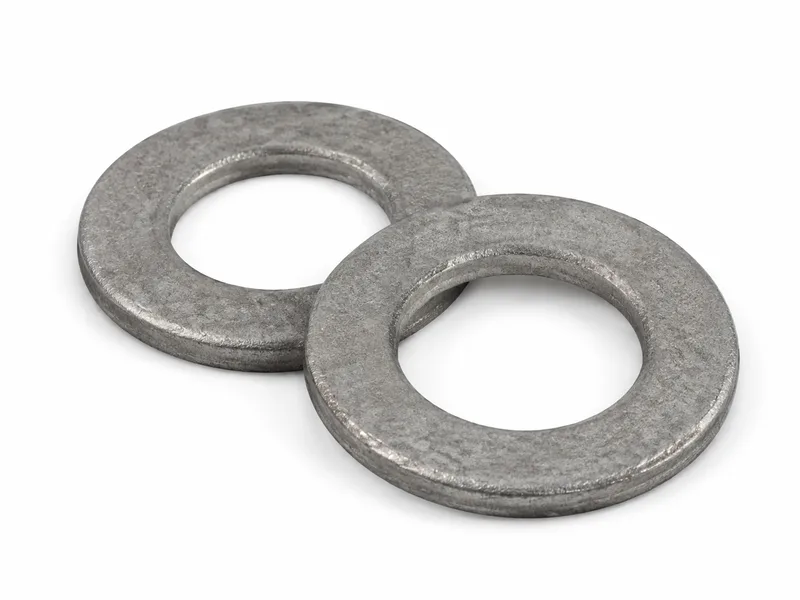
DIN 5406 MB is the lockwasher that makes a bearing locknut positive: the inner tongue seats in the shaft keyway, the nut tightens over it, and one of the outer tabs bends into a nut slot to stop rotation absolutely — no friction, no prevailing torque, just positive metal engagement. The collected 04/2011-edition table runs the MB series across shaft diameters d1 10 to 200 (with the doubled d1 values in the ladder, e.g. 120; 120 — the source's own print for the two washer groups per size, carried verbatim) giving the tab geometry e, f and b1, thickness s min. and the mass per 1000 pcs; the superseded 1993 edition is transcribed as a second table alongside. The washer orders as a system with the locknut (ISO 2982 — registered here) and the shaft keyway: the tongue width b1/e must match the keyway, which is why these are ordered by shaft size, not by bolt thread.
| Standard / scope | DIN 5406 MB lockwashers for rolling bearings — shaft diameters d1 10 to 200, edition 04/2011; superseded 1993 edition transcribed as a separate table |
|---|---|
| Tab geometry | e, f and b1 per size — the outer tab set that bends into the locknut slots, and the keyway-engagement dimensions |
| Thickness s | s min. per size (2.5 at the 200 end) — the plate gauge that must spring without cracking on tab bending |
| Ladder note | Doubled d1 values (120; 120 … 200; 200) printed in the source ladder, carried verbatim — the washer groups per shaft size |
| Mass | Approximate kg per 1000 pcs per size (21.4 at the 200 end); matching locknuts per ISO 2982 (registered separately) |
| Not tabulated | Material/hardness, keyway tolerance, finish — per RFQ |
Materials
- MB lockwashers order in spring-grade steel — the tabs bend and re-bend in service, so the plate needs the right temper, not just thickness; stainless versions for corrosive plants at reduced re-bend life. Order by shaft diameter with the locknut call-out, state the shaft keyway width, and say how many re-tightening cycles the joint expects: each re-tightening re-bends a new tab, and the tab count in e/f is the budget
Ordering & documentation
Documents
Shipments are backed by Mill Test Certificate (MTC), Dimensional Report, Salt Spray Test Report on request, with full batch traceability from raw material to finished product. Quality management follows the owner-confirmed compliance list: ISO 9001:2015, RoHS, REACH. Exact document sets are confirmed on the order.
Quotation
- The fastener family (DIN 5406 MB Lockwashers for Rolling Bearings) plus the standard designation from your drawing — DIN / ISO / JIS / ASTM / ANSI, or a drawing for custom parts.
- Size (diameter and length), thread type (metric or inch), property class or grade, and coating or finish.
- Quantity per size and your target delivery date.
- Destination country, and any required documents (for example a mill test certificate) so the quote includes them.
Sample & supply
Minimum order quantity is 10,000 pieces. Stock items run 3–7 days. Quantities or variants outside the standard range are confirmed at quotation.
Storage & shipping
Parts are packed for export and shipped factory-direct to buyers in Europe, Asia, the Americas and the Middle East. Store fasteners dry and protected until installation, and keep coated parts in their packaging until use; specific packing and preservation requirements can be stated on the order and confirmed at quotation.
Frequently asked questions
Why use a lockwasher when prevailing-torque locknuts exist?
Because the two locking principles fail differently, and bearings sit where that matters. A prevailing-torque nut loses lock if it backs off even a fraction of a turn repeatedly under vibration cycles; the MB washer cannot back off at all — the bent tab is a mechanical stop, and unlocking requires deliberately bending the tab back. That is why bearing arrangements on shafts that reverse, shock or see maintenance re-tightening standardized on DIN 5406 + locknut. The costs are the keyway (the shaft must carry it) and the tab budget — every re-tightening consumes the next tab. High-vibration, reversing or safety-critical spindles take the washer; static, lightly loaded positions can accept the nut alone.
Why does the ladder print each large size twice (120; 120 … 200; 200)?
That doubled print is how the source table lists the larger shaft sizes — two washer entries per nominal diameter, carried verbatim in the grid and flagged, not merged. Read the full row set per size: the two entries share the nominal d1 but carry their own e/f/b1 tab geometry, which corresponds to the different locknut slot groups a big shaft can serve. The practical discipline: order the washer by the full locknut call-out (standard designation plus shaft size), not by d1 alone — the tab geometry must match the nut you bought, and at the doubled sizes the d1 alone does not identify a unique washer. We match washer to locknut per the tables on every order.
Request a Quote
Get factory-direct pricing from the manufacturer.
What to include in your inquiry
- ✓ Standard and property class (e.g. DIN 912, ISO 4762, class 8.8) — or a drawing for custom parts.
- ✓ Sizes, lengths and thread type (metric or inch).
- ✓ Quantity per size and your target delivery date.
- ✓ Destination country, plus any coating or finish requirement.
- ✓ Any documents you need with the shipment (e.g. mill test certificate) so the quote includes them.
- ✓ Your inquiry goes straight to the factory team by email and gets a reply within 24 hours.
- ✓ Factory-direct pricing
- ✓ Standard and custom specifications
- ✓ Factory-direct export to buyers in Europe, Asia, the Americas and the Middle East
- ✓ Full fastener family support