
DIN 937 Hex Thin Slotted Nuts (Chamfered)
Hex thin slotted nuts per DIN 937, chamfered — the low-profile counterpart to the DIN 935 castle nut, tabulated M6 through M52, for cotter-pin locking where height is limited and no crown is provided.
Last updated: 2026-11
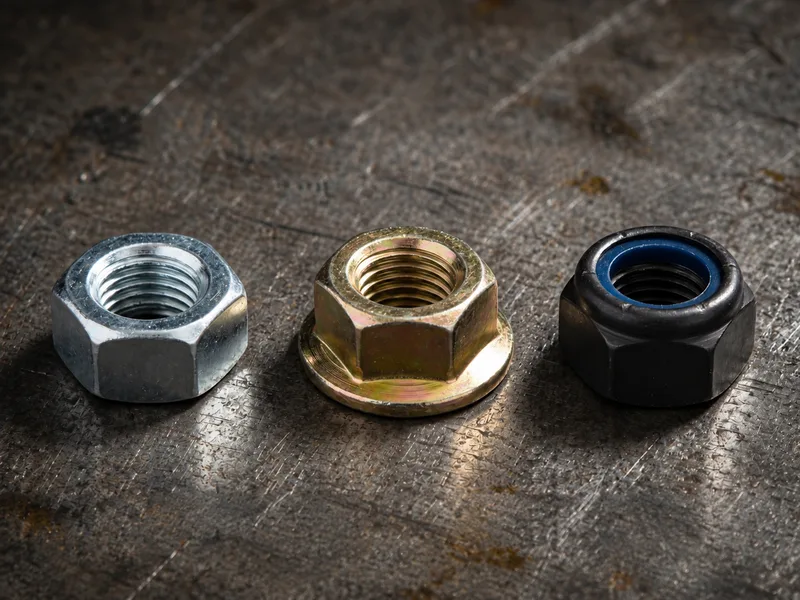
Specifications
DIN 937 does the DIN 935 job in a thinner profile: a chamfered hex nut, roughly half the height, with the same radial slots in its top face for a cotter pin through the bolt cross-hole. Where the castle nut earns its extra height by seating a crown, the thin slotted nut wins in the many joints that cannot spend that height — linkage eyes, clevis ends, adjustment hardware — while still needing a lock that survives service without preload. The tradeoff is thread engagement: with less height, fewer threads carry the load, so DIN 937 belongs on joints sized with that in mind rather than as a drop-in replacement for a full-height nut. The collected table runs M6 to M52 with across-flats s 10–80 mm, height k max 6–27 mm, slot width n and per-size weights, all row-aligned for quoting. Assembly and locking behavior are identical to the castle nut: tighten, align slots with the bolt cross-hole, insert and bend the pin — the lock is positive and visually checkable, independent of how tight the nut ended up.
| Standard | DIN 937 — hex thin slotted nuts, chamfered (low-profile cotter-pin lock nut) |
|---|---|
| Size range | M6 through M52 — width across flats s max (= nominal) 10–80 mm, height k max 6–27 mm |
| Slot geometry | Slot width n tabulated min/max per size (top-face slots for the cotter pin) |
| Locking mechanism | Positive: cotter pin through nut slot and bolt cross-hole — preload-independent and visually inspectable |
| Selection note | Reduced height means reduced thread engagement — size the joint for it; use DIN 935 where full nut height is available |
| Nominal thread | Pitch, coarse (mm) | Pitch, fine (mm) | de max (mm) | de min (mm) | e min (mm) | Height k max (mm) | k min (mm) | Slot width n min (mm) | Slot width n max (mm) | Width across flats s max (= nominal) (mm) | s min (mm) | w min (mm) | w max (mm) | Weight ≈ (kg / 1000 pcs) |
|---|---|---|---|---|---|---|---|---|---|---|---|---|---|---|
| M6 | 1 | - | / | / | 11.05 | 6 | 5.7 | 2 | 2.25 | 10 | 9.78 | 3.2 | 3.5 | 2.5 |
| (M7) | 1 | - | / | / | 12.12 | 7 | 6.64 | 2 | 2.25 | 11 | 10.73 | 3.7 | 4 | 3.4 |
| M8 | 1.25 | - | / | / | 14.38 | 8 | 7.64 | 2.5 | 2.75 | 13 | 12.73 | 4.2 | 4.5 | 5.4 |
| M10 | 1.5 | 1.25 | / | / | 18.9 | 9 | 8.64 | 2.8 | 3.05 | 17 | 16.73 | 4.7 | 5 | 11.3 |
| M12 | 1.75 | 1.25 | 17 | 16.57 | 20.1 | 10 | 9.64 | 3.5 | 3.8 | 19 | 18.67 | 5.7 | 6 | 14.7 |
| (M14) | 2 | - | 19 | 18.48 | 24.49 | 11 | 10.57 | 3.5 | 3.8 | 22 | 21.67 | 6.64 | 7 | 17.9 |
| M16 | 2 | - | 22 | 21.48 | 26.75 | 12 | 11.57 | 4.5 | 4.8 | 24 | 23.67 | 6.64 | 7 | 22.7 |
| (M18) | 2.5 | 1.5 | 25 | 24.3 | 29.56 | 13 | 12.3 | 4.5 | 4.8 | 27 | 26.16 | 7.64 | 8 | 33.2 |
| M20 | 2.5 | 1.5 | 28 | 27.3 | 32.95 | 13 | 12.3 | 4.5 | 4.8 | 30 | 29.16 | 7.64 | 8 | 41.1 |
| (M22) | 2.5 | 1.5 | 30 | 29.3 | 35.03 | 15 | 14.3 | 5.5 | 5.8 | 32 | 31 | 8.64 | 9 | 49.8 |
| M24 | 3 | - | 34 | 33 | 39.55 | 15 | 14.3 | 5.5 | 5.8 | 36 | 35 | 8.64 | 9 | 67.8 |
| (M27) | 3 | - | 38 | 37 | 45.2 | 17 | 16.3 | 5.5 | 5.8 | 41 | 40 | 10.57 | 11 | 103 |
| M30 | 3.5 | - | 42 | 41 | 50.85 | 18 | 17.3 | 7 | 7.36 | 46 | 45 | 10.57 | 11 | 133 |
| (M33) | 3.5 | - | 46 | 45 | 55.37 | 20 | 19.16 | 7 | 7.36 | 50 | 49 | 12.57 | 13 | 173 |
| M36 | 4 | - | 50 | 49 | 60.79 | 20 | 19.16 | 7 | 7.36 | 55 | 53.8 | 12.57 | 13 | 215 |
| (M39) | 4 | - | 55 | 53.8 | 66.44 | 22 | 21.16 | 7 | 7.36 | 60 | 58.8 | 12.57 | 13 | 269 |
| M42 | 4.5 | - | 58 | 56.8 | 72.02 | 23 | 22.16 | 9 | 9.36 | 65 | 63.8 | 13.57 | 14 | 310 |
| (M45) | 4.5 | - | 62 | 60.8 | 76.95 | 25 | 24.16 | 9 | 9.36 | 70 | 68.1 | 15.57 | 16 | 406 |
| M48 | 5 | - | 65 | 63.8 | 82.6 | 25 | 24.16 | 9 | 9.36 | 75 | 73.1 | 15.57 | 16 | 463 |
| (M52) | 5 | - | 70 | 68.8 | 88.25 | 27 | 26.16 | 9 | 9.36 | 80 | 78.1 | 17.57 | 18 | 580 |
Materials
- Material and strength grade specified per RFQ — the collected specification tables cover geometry and unit weights only
Ordering & documentation
Documents
Shipments are backed by Mill Test Certificate (MTC), Dimensional Report, Salt Spray Test Report on request, with full batch traceability from raw material to finished product. Quality management follows the owner-confirmed compliance list: ISO 9001:2015, RoHS, REACH. Exact document sets are confirmed on the order.
Quotation
- The fastener family (DIN 937 Hex Thin Slotted Nuts (Chamfered)) plus the standard designation from your drawing — DIN / ISO / JIS / ASTM / ANSI, or a drawing for custom parts.
- Size (diameter and length), thread type (metric or inch), property class or grade, and coating or finish.
- Quantity per size and your target delivery date.
- Destination country, and any required documents (for example a mill test certificate) so the quote includes them.
Sample & supply
Minimum order quantity is 10,000 pieces. Stock items run 3–7 days. Quantities or variants outside the standard range are confirmed at quotation.
Storage & shipping
Parts are packed for export and shipped factory-direct to buyers in Europe, Asia, the Americas and the Middle East. Store fasteners dry and protected until installation, and keep coated parts in their packaging until use; specific packing and preservation requirements can be stated on the order and confirmed at quotation.
Frequently asked questions
When does the thin DIN 937 make more sense than the DIN 935 castle nut?
When the joint needs the pin lock but cannot afford the crown height. Clevis and linkage ends, adjustable brackets, and hardware inside housings often have only the bare thread engagement available — a full castle nut would bottom out or leave too little thread in grip. DIN 937 gives the same positive, inspectable cotter-pin lock in roughly half the height. The cost is thread engagement, so the joint must be sized knowing fewer threads carry the load; where height is no constraint, the taller DIN 935 keeps more engagement and its crown adds pin guidance.
Does the thinner nut change how the lock is assembled?
No — the mechanism is identical. Tighten the nut, rotate it to bring a slot in line with the bolt cross-hole, run the cotter pin through and bend its legs. Both the slot and the pin are sized in the collected table per thread size, so take the pairing from the same row. Two practical notes from the low profile: there are fewer slots to align, so the final torque step should approach the hole position deliberately, and because thread engagement is shorter, verify the bolt cross-hole sits within the nut height rather than below it — a pin that misses the slot locks nothing.
What is the MOQ and lead time for this nut type?
The minimum order quantity is 10,000 pieces. Stock items ship in 3–7 days; non-stock items are confirmed at quotation. Confirm the exact schedule against quantity and size mix at quotation.
Request a Quote
Get factory-direct pricing from the manufacturer.
What to include in your inquiry
- ✓ Standard and property class (e.g. DIN 912, ISO 4762, class 8.8) — or a drawing for custom parts.
- ✓ Sizes, lengths and thread type (metric or inch).
- ✓ Quantity per size and your target delivery date.
- ✓ Destination country, plus any coating or finish requirement.
- ✓ Any documents you need with the shipment (e.g. mill test certificate) so the quote includes them.
- ✓ Your inquiry goes straight to the factory team by email and gets a reply within 24 hours.
- ✓ Factory-direct pricing
- ✓ Standard and custom specifications
- ✓ Factory-direct export to buyers in Europe, Asia, the Americas and the Middle East
- ✓ Full fastener family support