
DIN 7999 High-Strength Hexagon Fit Bolts for Structural Bolting
DIN 7999 high-strength hex fit bolts with large width across flats for structural steel bolting, M12 to M30: body d, head k, large s, e min, y and the length ladder to 200 mm.
Last updated: 2026-11
Specifications
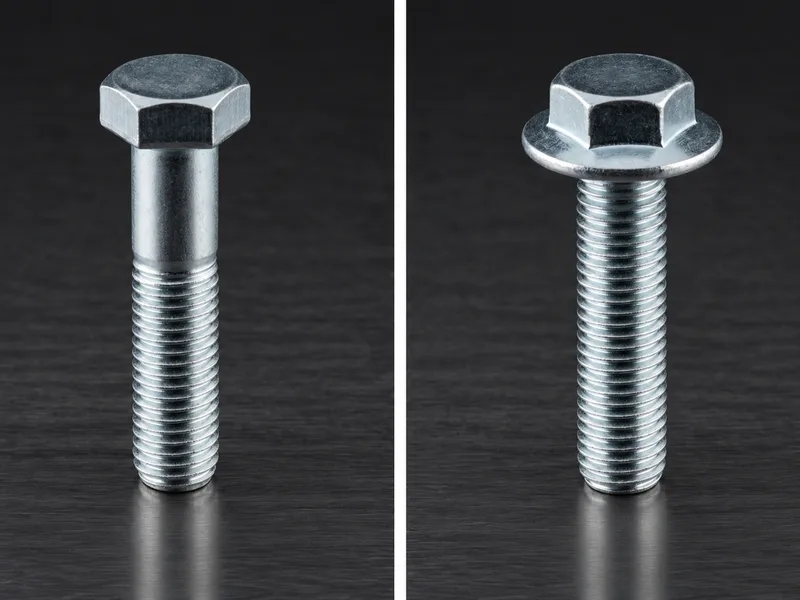
DIN 7999 is the fit-bolt companion to the large-WAF HV structural system — a bolt whose plain shank d is turned to fit reamed holes (d = 31 on the M30 size, one millimetre over nominal) so the joint takes shear on the bolt body instead of friction alone. The collected table runs M12 to M30 with head height k (8 to 19), the oversized width across flats s (50 at M30, versus 46 for ordinary hex), e min (55.37 at M30) and the y value (thread stick-out, 11.5 at M30). The withdrawn label is the source page's own; the geometry is what legacy HV/fit connections still order against. Lengths run 40 to 200 mm; the fit shank means these bolts are installed driven into reamed or matched-drilled holes, not clearance holes, which is why the RFQ must carry hole diameter and connection detail, not just "M20 × 80 fit bolt".
| Standard / scope | DIN 7999 high-strength hexagon fit bolts, large width across flats, structural steel bolting — M12 to M30, withdrawn (source label) |
|---|---|
| Fit shank d | Nominal +1 mm: 13 (M12), 17 (M16), 21 (M20), 23 (M22), 25 (M24), 28 (M27), 31 (M30) — driven into reamed/matched holes |
| Head geometry | k 8 to 19 by size; s nom 50 at M30-class (large WAF); e min 21.10 (M12) to 55.37 (M30); y (thread protrusion) 4 to 11.5 |
| Commercial lengths | Ladder 40 to 200 mm in 5 mm steps; approximate mass per 1000 pcs (ρ=7,85 kg/dm³) tabulated (763 at M22×200, 1450 at M30×200) |
| Not tabulated | Property class (HV-system bolts are ordered by system class), finish, hole tolerances — confirmed at quotation |
Materials
- Structural fit bolts order in the high-strength classes of the HV system (10.9-type) with the matching large-WAF nuts and washers, finishes typically self-colour for protected connections or mechanical galvanizing for weathering steel work. State the connection design (slip-critical or bearing on the fit shank), hole diameter after reaming, class and finish on the RFQ — the fit bolt only performs if the hole is made to match
Ordering & documentation
Documents
Shipments are backed by Mill Test Certificate (MTC), Dimensional Report, Salt Spray Test Report on request, with full batch traceability from raw material to finished product. Quality management follows the owner-confirmed compliance list: ISO 9001:2015, RoHS, REACH. Exact document sets are confirmed on the order.
Quotation
- The fastener family (DIN 7999 High-Strength Hexagon Fit Bolts for Structural Bolting) plus the standard designation from your drawing — DIN / ISO / JIS / ASTM / ANSI, or a drawing for custom parts.
- Size (diameter and length), thread type (metric or inch), property class or grade, and coating or finish.
- Quantity per size and your target delivery date.
- Destination country, and any required documents (for example a mill test certificate) so the quote includes them.
Sample & supply
Minimum order quantity is 1,000–10,000 pieces depending on size. Stock items run 3–7 days. High-strength and custom parts run 15–25 days. Quantities or variants outside the standard range are confirmed at quotation.
Storage & shipping
Parts are packed for export and shipped factory-direct to buyers in Europe, Asia, the Americas and the Middle East. Store fasteners dry and protected until installation, and keep coated parts in their packaging until use; specific packing and preservation requirements can be stated on the order and confirmed at quotation.
Frequently asked questions
What makes a fit bolt different from an ordinary structural hex bolt?
The shank. An ordinary HV bolt carries the load through friction between the plates; a fit bolt (DIN 7999 here) has a precision shank one millimetre over the thread nominal that fills a reamed hole, so shear transfers through the shank itself and the connection barely slips at all. That is why the geometry table lists d separately from the thread size, and why the s width across flats is larger — the head is sized for the higher installation and service loads. The trade is installation cost: every hole must be reamed or match-drilled to the fit shank, so these bolts go where slip cannot be tolerated (fatigue-loaded, reversing or precisely aligned connections), not across a whole structure.
The standard is withdrawn — what do I order against a DIN 7999 drawing?
Order by DIN 7999 number, thread size and length as the drawing prints — the part is still produced and quoted — and add the property class and finish if the drawing does not carry them. If the project allows a modern substitution, the HV fit-bolt family in EN 14399 covers the same duty in the common sizes; we will confirm dimensional equivalence size by size against the drawing before quoting the swap, because the fit shank and head dims must match the existing holes, not just the nominal thread. Either way, quote us the hole diameter actually reamed — that dimension drives acceptance more than the bolt number does.
Related knowledge
- What Bolt Property Classes 8.8, 10.9 and 12.9 Encode — and When High Strength Stops Being the Right Choice
- Bolt Grade Selection: ISO 898-1 8.8/10.9/12.9 vs ASTM A307 and A325
- 8.8 vs 10.9 vs 12.9 Bolts: Strength, Hardness and Cost — What the Evidence Settles
- Calculating Bolt Preload and Clamp Force: Torque, Friction and Tightening Method
- How to Determine Tightening Torque and Choose a Tightening Method for a Bolted Joint
- Fastener Failure Modes: Which Fatigue, Creep and SCC Controls the Evidence Supports
- Hydrogen Embrittlement in High-Strength Bolts: Which Grades Need Controls, Which Coatings and Baking Schedules Are Acceptable, and What to Require Before the RFQ
Request a Quote
Get factory-direct pricing from the manufacturer.
What to include in your inquiry
- ✓ Standard and property class (e.g. DIN 912, ISO 4762, class 8.8) — or a drawing for custom parts.
- ✓ Sizes, lengths and thread type (metric or inch).
- ✓ Quantity per size and your target delivery date.
- ✓ Destination country, plus any coating or finish requirement.
- ✓ Any documents you need with the shipment (e.g. mill test certificate) so the quote includes them.
- ✓ Your inquiry goes straight to the factory team by email and gets a reply within 24 hours.
- ✓ Factory-direct pricing
- ✓ Standard and custom specifications
- ✓ Factory-direct export to buyers in Europe, Asia, the Americas and the Middle East
- ✓ Full fastener family support