
ISO Class 10.9 Bolts
Property Class 10.9 bolts per ISO 898-1 — alloy steel, quenched and tempered, 1,040 MPa minimum tensile, 940 MPa yield, 32–39 HRC. The high-strength structural and heavy-duty metric grade.
Last updated: 2026-11
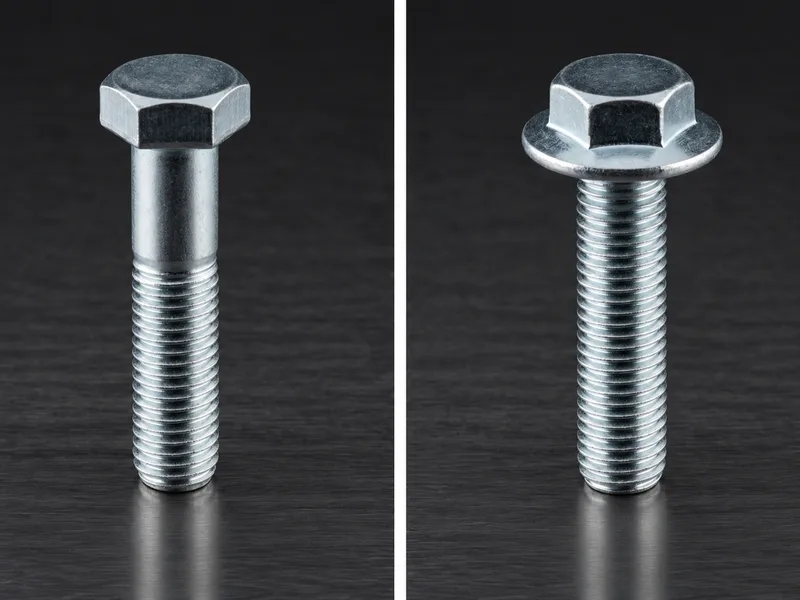
Specifications
Class 10.9 is the step up from 8.8 where joint loads or weight budgets demand it: high-strength structural connections, heavy equipment, and automotive drivetrain and chassis hardware. It is quenched and tempered alloy steel with a minimum tensile of 1,040 MPa and yield at 90% of tensile, so it stretches less before yielding and clamps more tightly for the same bolt size. The trade-offs are standard high-strength practice: more sensitive to hydrogen embrittlement from improper plating, so coated 10.9 parts are baked after plating.
| Standard | ISO 898-1, property Class 10.9 (hex bolts per ISO 4014/4017) |
|---|---|
| Material | Alloy steel, quenched and tempered |
| Tensile strength, min | 1,040 MPa (nominal 1,000 MPa) — 150,800 psi |
| Yield strength (min) / proof load | 940 MPa yield; proof load 830 MPa |
| Hardness | 32–39 HRC |
| Typical applications | High-strength structural connections, heavy-duty and high-stress machinery, chassis and drivetrain hardware |
| Finishes | Zinc plate, zinc flake, hot-dip galvanized (allowed for this class); post-plate bake for hardened parts |
Where this grade fits
Class 10.9 buys roughly 30% more tensile than 8.8 at the cost of ductility: it is more sensitive to hydrogen embrittlement, so electroplated parts need a post-plate bake, and its higher notch sensitivity limits the fatigue gain a grade upgrade delivers. Choose it where the joint calculation needs the clamp load — not as a default strength upgrade.
Deep read: Hydrogen Embrittlement in High-Strength Bolts: Which Grades Need Controls, Which Coatings and Baking Schedules Are Acceptable, and What to Require Before the RFQ · Fastener Failure Modes: Which Fatigue, Creep and SCC Controls the Evidence Supports
Materials
- Alloy steel (quenched and tempered)
Ordering & documentation
Documents
Shipments are backed by Mill Test Certificate (MTC), Dimensional Report, Salt Spray Test Report on request, with full batch traceability from raw material to finished product. Quality management follows the owner-confirmed compliance list: ISO 9001:2015, RoHS, REACH. Exact document sets are confirmed on the order.
Quotation
- The fastener family (ISO Class 10.9 Bolts) plus the standard designation from your drawing — DIN / ISO / JIS / ASTM / ANSI, or a drawing for custom parts.
- Size (diameter and length), thread type (metric or inch), property class or grade, and coating or finish.
- Quantity per size and your target delivery date.
- Destination country, and any required documents (for example a mill test certificate) so the quote includes them.
Sample & supply
Minimum order quantity is 1,000–10,000 pieces depending on size. Stock items run 3–7 days. High-strength and custom parts run 15–25 days. Quantities or variants outside the standard range are confirmed at quotation.
Storage & shipping
Parts are packed for export and shipped factory-direct to buyers in Europe, Asia, the Americas and the Middle East. Store fasteners dry and protected until installation, and keep coated parts in their packaging until use; specific packing and preservation requirements can be stated on the order and confirmed at quotation.
Frequently asked questions
When should I specify 10.9 instead of 8.8?
Where the joint calculation needs the extra clamp load or fatigue margin: higher-tensile structural connections, heavily loaded machinery, and weight-sensitive assemblies. 10.9 is about 30% stronger in tensile than 8.8 but less ductile and more embrittlement-sensitive, so if the load case is comfortably within 8.8 capability, 8.8 is the more forgiving choice. Both classes accept galvanizing and common coatings.
What is the MOQ and lead time for this bolt grade?
The minimum order quantity is 1,000–10,000 pieces depending on size. Stock items ship in 3–7 days; high-strength and custom parts in 15–25 days. Common diameters in this grade are widely stocked; confirm the exact schedule against quantity and size mix at quotation.
What should an RFQ for this bolt grade state?
State the standard and grade (for example ISO 4017 Class 8.8 or ASTM F3125 Grade A325 Type 1), diameter and length, thread type (metric coarse or UNC/UNF), finish (plain, zinc, or hot-dip galvanized where the grade permits), required certificates such as a mill test report per EN 10204 3.1, and quantity per size — plus destination country.
Related knowledge
- What Bolt Property Classes 8.8, 10.9 and 12.9 Encode — and When High Strength Stops Being the Right Choice
- Bolt Grade Selection: ISO 898-1 8.8/10.9/12.9 vs ASTM A307 and A325
- 8.8 vs 10.9 vs 12.9 Bolts: Strength, Hardness and Cost — What the Evidence Settles
- Calculating Bolt Preload and Clamp Force: Torque, Friction and Tightening Method
- How to Determine Tightening Torque and Choose a Tightening Method for a Bolted Joint
- Fastener Failure Modes: Which Fatigue, Creep and SCC Controls the Evidence Supports
- Hydrogen Embrittlement in High-Strength Bolts: Which Grades Need Controls, Which Coatings and Baking Schedules Are Acceptable, and What to Require Before the RFQ
Request a Quote
Get factory-direct pricing from the manufacturer.
What to include in your inquiry
- ✓ Standard and property class (e.g. DIN 912, ISO 4762, class 8.8) — or a drawing for custom parts.
- ✓ Sizes, lengths and thread type (metric or inch).
- ✓ Quantity per size and your target delivery date.
- ✓ Destination country, plus any coating or finish requirement.
- ✓ Any documents you need with the shipment (e.g. mill test certificate) so the quote includes them.
- ✓ Your inquiry goes straight to the factory team by email and gets a reply within 24 hours.
- ✓ Factory-direct pricing
- ✓ Standard and custom specifications
- ✓ Factory-direct export to buyers in Europe, Asia, the Americas and the Middle East
- ✓ Full fastener family support