
DIN 961 Hex Screws (Fine Pitch, Fully Threaded)
Fully threaded hexagon head screws with fine-pitch thread per DIN 961 — six size-block grids covering M8 to M52, threaded to the head, with one or two fine pitch selections per size and product grades A/B tolerance rows. Fine-pitch counterpart of DIN 933; ISO successor designation: ISO 8676.
Last updated: 2026-11
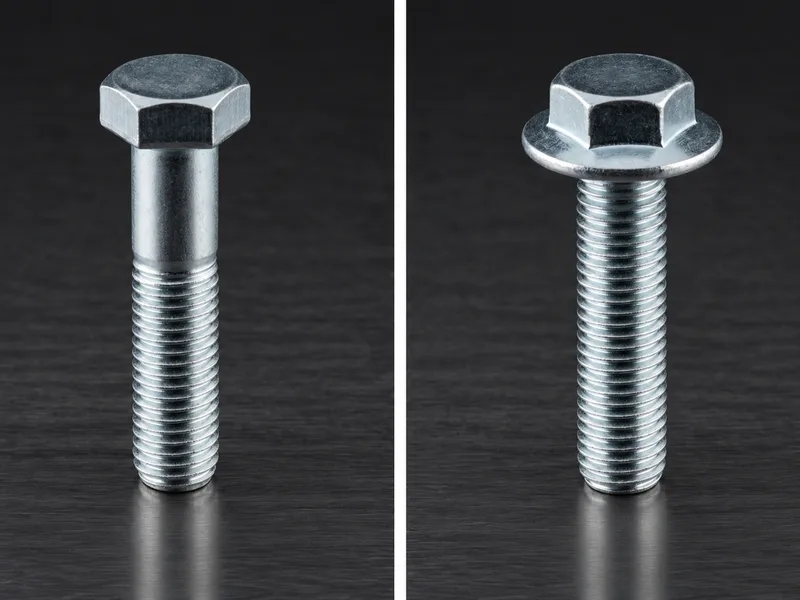
Specifications
DIN 961 is the fully threaded, fine-pitch member of the DIN hex pair: the thread runs along the usable length beneath the head, with the same fine-pitch selections and Grade A/B tolerance rows as DIN 960 tabulates for the partially threaded configuration, over a shorter ladder — six blocks, M8 through M52. Full thread is the practical choice for thin clamped stacks, varying grip lengths and maintenance inventories where one screw length covers several joint thicknesses; the fine pitch adds adjustment sensitivity and vibration tolerance where a coarse thread would back off. Because there is no shank, the joint loses the shear-plane and locating benefits a DIN 960 bolt provides — the comparison discipline that applies to the coarse pair applies here too: a drawing designed around a shank should not quietly receive a fully threaded screw. The head geometry is shared across the pair: s max = nominal size (M12: 19, M20: 30, M52: 80), k nominal rising with diameter (M12: 7.5 to M52: 33), with Grade A/B min rows where tabulated and "-" carried verbatim wherever the source tabulates no value. Unlike the DIN 960 grids, no thread-length bands are tabulated here — the collected page carries no b rows for the fully threaded configuration. Strength grades, proof loads and finish are not tabulated on this page — per RFQ.
| Standard | DIN 961 — hexagon head screws, fine-pitch thread, fully threaded (threaded to the head); size blocks M8 - M52 |
|---|---|
| Thread | Fine pitch selections per size as printed (fine thread-1 / fine thread-2): e.g. M8 1 / -, M12 1.5 / 1.25, M20 1.5 / 2, M27 2 / -, M36 - M52 a single fine pitch of 3 |
| Product grades | A and B tolerance rows in the grids (ds, dw, e, k, s carry Grade A / Grade B min pairs where tabulated); tolerance class, not strength — property class per RFQ |
| Head geometry (anchor sizes from the collected tables) | Width across flats s max = nominal size (M12: 19, M20: 30, M36: 55, M52: 80); head height k nominal (M12: 7.5, M20: 12.5, M36: 22.5, M52: 33); e min Grade B (M12: 20.88, M36: 60.79, M52: 88.25) |
| Chamfer / head seating rows | a max (e.g. M12: 4.5), c min/max (e.g. M12: 0.15 / 0.6; M36: 0.2 / 0.8), da max, k1 min and r min rows complete the seating geometry — no ds shank row, unlike the DIN 960 grids |
| Series extent | Thread sizes print without parentheses across all six blocks on this page (M8 - M52, preferred ladder as tabulated) |
| Counterpart / successor | Fine-pitch counterpart of DIN 933 (coarse fully threaded DIN screw); ISO successor designation ISO 8676 — read the drawing before substituting between designations |
| Not tabulated | Strength grades (ISO 898-1 classes), proof loads, materials, finish, thread-length bands — per RFQ |
| Screw Thread d | M8 | M10 | M12 | ||
|---|---|---|---|---|---|
| P | Pitch | Fine thread-1 | 1 | 1 | 1.5 |
| Fine thread-2 | - | 1.25 | 1.25 | ||
| a | max | 3 | 3.75 | 4.5 | |
| c | min | 0.15 | 0.15 | 0.15 | |
| max | 0.6 | 0.6 | 0.6 | ||
| da | max | 9.2 | 11.2 | 13.7 | |
| dw | Grade A | min | 11.6 | 15.6 | 17.4 |
| Grade B | min | 11.4 | 15.4 | 17.2 | |
| e | Grade A | min | 14.38 | 18.9 | 21.1 |
| Grade B | min | 14.2 | 18.72 | 20.88 | |
| k | Nominal Size | 5.3 | 6.4 | 7.5 | |
| Grade A | min | 5.15 | 6.22 | 7.32 | |
| max | 5.45 | 6.58 | 7.68 | ||
| Grade B | min | 5.06 | 6.11 | 7.21 | |
| max | 5.54 | 6.69 | 7.79 | ||
| k1 | min | 3.54 | 4.28 | 5.05 | |
| r | min | 0.4 | 0.4 | 0.6 | |
| s | max=nominal size | 13 | 17 | 19 | |
| Grade A | min | 12.73 | 16.73 | 18.67 | |
| Grade B | min | 12.57 | 16.57 | 18.48 |
- Cells print '-' where the source tabulates no value ('Fine thread-2' rows affected); '-' carried verbatim, not read as zero or blank.
| Screw Thread d | M14 | M16 | M18 | ||
|---|---|---|---|---|---|
| P | Pitch | Fine thread-1 | 1.5 | 1.5 | 2 |
| Fine thread-2 | - | - | 1.5 | ||
| a | max | 4.5 | 4.5 | 6 | |
| c | min | 0.15 | 0.2 | 0.2 | |
| max | 0.6 | 0.8 | 0.8 | ||
| da | max | 15.7 | 17.7 | 20.2 | |
| dw | Grade A | min | 20.5 | 22.5 | 25.3 |
| Grade B | min | 20.1 | 22 | 24.8 | |
| e | Grade A | min | 24.49 | 26.75 | 30.14 |
| Grade B | min | 23.91 | 26.17 | 29.56 | |
| k | Nominal Size | 8.8 | 10 | 11.5 | |
| Grade A | min | 8.62 | 9.82 | 11.28 | |
| max | 8.98 | 10.18 | 11.72 | ||
| Grade B | min | 8.51 | 9.71 | 11.15 | |
| max | 9.09 | 10.29 | 11.85 | ||
| k1 | min | 5.96 | 6.8 | 7.8 | |
| r | min | 0.6 | 0.6 | 0.6 | |
| s | max=nominal size | 22 | 24 | 27 | |
| Grade A | min | 21.67 | 23.67 | 26.67 | |
| Grade B | min | 21.16 | 23.16 | 26.16 |
- Cells print '-' where the source tabulates no value ('Fine thread-2' rows affected); '-' carried verbatim, not read as zero or blank.
| Screw Thread d | M20 | M22 | M24 | ||
|---|---|---|---|---|---|
| P | Pitch | Fine thread-1 | 1.5 | 2 | 2 |
| Fine thread-2 | 2 | 1.5 | 1.5 | ||
| a | max | 6 | 6 | 6 | |
| c | min | 0.2 | 0.2 | 0.2 | |
| max | 0.8 | 0.8 | 0.8 | ||
| da | max | 22.4 | 24.4 | 26.4 | |
| dw | Grade A | min | 28.2 | 30 | 33.6 |
| Grade B | min | 27.7 | 29.5 | 33.2 | |
| e | Grade A | min | 33.53 | 35.72 | 39.98 |
| Grade B | min | 32.95 | 35.03 | 39.55 | |
| k | Nominal Size | 12.5 | 14 | 15 | |
| Grade A | min | 12.28 | 13.78 | 14.78 | |
| max | 12.72 | 14.22 | 15.22 | ||
| Grade B | min | 12.15 | 13.65 | 14.65 | |
| max | 12.85 | 14.35 | 15.35 | ||
| k1 | min | 8.5 | 9.6 | 10.3 | |
| r | min | 0.8 | 0.8 | 0.8 | |
| s | max=nominal size | 30 | 32 | 36 | |
| Grade A | min | 29.67 | 31.61 | 35.38 | |
| Grade B | min | 29.16 | 31 | 35 |
| Screw Thread d | M27 | M30 | M33 | ||
|---|---|---|---|---|---|
| P | Pitch | Fine thread-1 | 2 | 2 | 2 |
| Fine thread-2 | - | - | - | ||
| a | max | 6 | 6 | 6 | |
| c | min | 0.2 | 0.2 | 0.2 | |
| max | 0.8 | 0.8 | 0.8 | ||
| da | max | 30.4 | 33.4 | 36.4 | |
| dw | Grade A | min | - | - | - |
| Grade B | min | 38 | 42.7 | 46.6 | |
| e | Grade A | min | - | - | - |
| Grade B | min | 45.2 | 50.85 | 55.37 | |
| k | Nominal Size | 17 | 18.7 | 21 | |
| Grade A | min | - | - | - | |
| max | - | - | - | ||
| Grade B | min | 16.65 | 18.28 | 20.58 | |
| max | 17.35 | 19.12 | 21.42 | ||
| k1 | min | 11.7 | 12.8 | 14.4 | |
| r | min | 1 | 1 | 1 | |
| s | max=nominal size | 41 | 46 | 50 | |
| Grade A | min | - | - | - | |
| Grade B | min | 40 | 45 | 49 |
- Cells print '-' where the source tabulates no value ('Fine thread-2', 'dw', 'e', 'Grade A', 'max' rows affected); '-' carried verbatim, not read as zero or blank.
| Screw Thread d | M36 | M39 | M42 | ||
|---|---|---|---|---|---|
| P | Pitch | Fine thread-1 | 3 | 3 | 3 |
| Fine thread-2 | - | - | - | ||
| a | max | 9 | 9 | 9 | |
| c | min | 0.2 | 0.3 | 0.3 | |
| max | 0.8 | 1 | 1 | ||
| da | max | 39.4 | 42.4 | 45.6 | |
| dw | Grade A | min | - | - | - |
| Grade B | min | 51.1 | 55.9 | 59.9 | |
| e | Grade A | min | - | - | - |
| Grade B | min | 60.79 | 66.44 | 71.3 | |
| k | Nominal Size | 22.5 | 25 | 26 | |
| Grade A | min | - | - | - | |
| max | - | - | - | ||
| Grade B | min | 22.08 | 24.58 | 25.58 | |
| max | 22.92 | 25.42 | 26.42 | ||
| k1 | min | 15.5 | 17.2 | 17.9 | |
| r | min | 1 | 1 | 1.2 | |
| s | max=nominal size | 55 | 60 | 65 | |
| Grade A | min | - | - | - | |
| Grade B | min | 53.8 | 58.8 | 63.1 |
- Cells print '-' where the source tabulates no value ('Fine thread-2', 'dw', 'e', 'Grade A', 'max' rows affected); '-' carried verbatim, not read as zero or blank.
| Screw Thread d | M45 | M48 | M52 | ||
|---|---|---|---|---|---|
| P | Pitch | Fine thread-1 | 3 | 3 | 3 |
| Fine thread-2 | - | - | - | ||
| a | max | 9 | 9 | 9 | |
| c | min | 0.3 | 0.3 | 0.3 | |
| max | 1 | 1 | 1 | ||
| da | max | 48.6 | 52.6 | 56.6 | |
| dw | Grade A | min | - | - | - |
| Grade B | min | 64.7 | 69.4 | 74.2 | |
| e | Grade A | min | - | - | - |
| Grade B | min | 76.95 | 82.6 | 88.25 | |
| k | Nominal Size | 28 | 30 | 33 | |
| Grade A | min | - | - | - | |
| max | - | - | - | ||
| Grade B | min | 27.58 | 29.58 | 32.5 | |
| max | 28.42 | 30.42 | 33.5 | ||
| k1 | min | 19.3 | 20.9 | 22.8 | |
| r | min | 1.2 | 1.6 | 1.6 | |
| s | max=nominal size | 70 | 75 | 80 | |
| Grade A | min | - | - | - | |
| Grade B | min | 68.1 | 73.1 | 78.1 |
- Cells print '-' where the source tabulates no value ('Fine thread-2', 'dw', 'e', 'Grade A', 'max' rows affected); '-' carried verbatim, not read as zero or blank.
Materials
- Fully threaded fine-pitch hex screws ship in the same material spectrum as the rest of the hex family — carbon steel by property class and stainless A2/A4. The dimensions tabulated here are material-independent; state pitch explicitly on the RFQ together with diameter and length
Ordering & documentation
Documents
Shipments are backed by Mill Test Certificate (MTC), Dimensional Report, Salt Spray Test Report on request, with full batch traceability from raw material to finished product. Quality management follows the owner-confirmed compliance list: ISO 9001:2015, RoHS, REACH. Exact document sets are confirmed on the order.
Quotation
- The fastener family (DIN 961 Hex Screws (Fine Pitch, Fully Threaded)) plus the standard designation from your drawing — DIN / ISO / JIS / ASTM / ANSI, or a drawing for custom parts.
- Size (diameter and length), thread type (metric or inch), property class or grade, and coating or finish.
- Quantity per size and your target delivery date.
- Destination country, and any required documents (for example a mill test certificate) so the quote includes them.
Sample & supply
Minimum order quantity is 1,000–10,000 pieces depending on size. Stock items run 3–7 days. High-strength and custom parts run 15–25 days. Quantities or variants outside the standard range are confirmed at quotation.
Storage & shipping
Parts are packed for export and shipped factory-direct to buyers in Europe, Asia, the Americas and the Middle East. Store fasteners dry and protected until installation, and keep coated parts in their packaging until use; specific packing and preservation requirements can be stated on the order and confirmed at quotation.
Frequently asked questions
DIN 960 or DIN 961 — when does the fully threaded fine-pitch screw win?
When the grip is thin, variable or both. DIN 961 threads to the head, so one length covers several joint thicknesses and engages fully even on shallow stacks — the practical reason maintenance stores stock it. The cost is geometry, and it is the same trade the coarse pair makes: no unthreaded shank means no shear-plane control in transversely loaded joints and no smooth locating body through clearance holes. The collected tables also show the ladder difference — DIN 961 stops at M52 where DIN 960 runs to M100 — so large fine-pitch sizes only exist in the partially threaded configuration. Decide by joint design first, pitch second; and if the drawing names either designation, order that designation rather than substituting on head dimensions alone.
Why do the DIN 961 grids have no ds shank rows and no thread-length bands?
Because there is no shank: a DIN 961 screw is threaded to the head, so the collected page tabulates no ds (shank diameter) rows and no b thread-length bands — every row from P (pitch) down to s (width across flats) describes pitch, head and seating geometry (a, c, da, dw, e, k, k1, r). That is also the buying implication: usable thread is not a band you verify against a table, it is the whole length you order, so nominal length does the work the thread-length bands do on a DIN 960 bolt. Two practical checks remain: confirm the length gives full nut engagement before the joint clamps (under-threaded engagement costs you exactly the vibration tolerance the fine pitch was chosen for), and put nominal length plus pitch on the RFQ — "DIN 961 M12 × 1.25 × 60", diameter, pitch and length together.
Related knowledge
- What Bolt Property Classes 8.8, 10.9 and 12.9 Encode — and When High Strength Stops Being the Right Choice
- Bolt Grade Selection: ISO 898-1 8.8/10.9/12.9 vs ASTM A307 and A325
- 8.8 vs 10.9 vs 12.9 Bolts: Strength, Hardness and Cost — What the Evidence Settles
- Calculating Bolt Preload and Clamp Force: Torque, Friction and Tightening Method
- How to Determine Tightening Torque and Choose a Tightening Method for a Bolted Joint
- Fastener Failure Modes: Which Fatigue, Creep and SCC Controls the Evidence Supports
- Hydrogen Embrittlement in High-Strength Bolts: Which Grades Need Controls, Which Coatings and Baking Schedules Are Acceptable, and What to Require Before the RFQ
Request a Quote
Get factory-direct pricing from the manufacturer.
What to include in your inquiry
- ✓ Standard and property class (e.g. DIN 912, ISO 4762, class 8.8) — or a drawing for custom parts.
- ✓ Sizes, lengths and thread type (metric or inch).
- ✓ Quantity per size and your target delivery date.
- ✓ Destination country, plus any coating or finish requirement.
- ✓ Any documents you need with the shipment (e.g. mill test certificate) so the quote includes them.
- ✓ Your inquiry goes straight to the factory team by email and gets a reply within 24 hours.
- ✓ Factory-direct pricing
- ✓ Standard and custom specifications
- ✓ Factory-direct export to buyers in Europe, Asia, the Americas and the Middle East
- ✓ Full fastener family support