
DIN 2510 L/NF Stud Bolt and Nut Weight Chart
Per-piece weights in kg for DIN 2510 L/NF wafer-style stud bolts M12 - M52 at lengths 50 - 300+, plus the per-nut weight row per size — the shipping and weld-neck flange planning numbers, carried from the collected chart with its staircase blanks verbatim.
Last updated: 2026-11
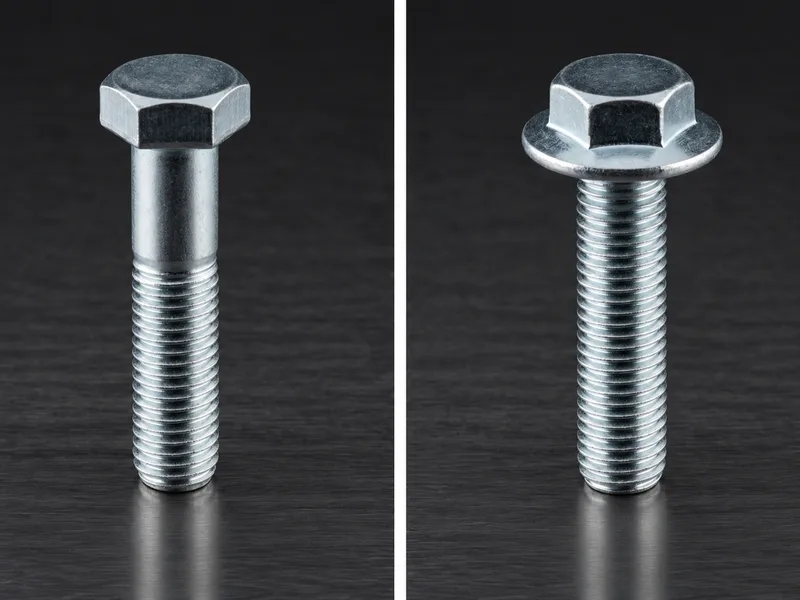
Specifications
DIN 2510 is the wafer-style (reduced-shank) stud for high-temperature flanged joints, and its weight matters for two very practical reasons: freight on flange-sets is priced by the kilo, and the reduced shank is precisely why these studs are lighter than a full-thread stud of the same size. The collected chart tabulates per-piece weight in kg across M12 - M52 and lengths from 50 up past 300, and the shape of the data is the design itself: the staircase of blanks shows which length/size combinations are offered (M12 starts at 0.0888 kg for a 50 mm stud and the top of the chart runs single-digit kilograms at M52 x 300), with each size picking up where its ladder begins. The chart closes with a per-nut weight row (0.031 kg at M12 up to 1.34 kg at M52) — the number you add per nut when a flange set is quoted. Two reading rules from the source, carried as printed: blank cells are unoffered combinations, not zeros, and the M24/L210 cell prints 78.48 against a column whose neighbours run 0.5-0.9 — flagged in the table below as the source's own figure, not corrected. Weights are per piece as charted; they are not a substitute for certified shipping weights — per RFQ.
| Chart basis | DIN 2510 L/NF wafer-style stud bolts (reduced shank) — per-piece weight in kg as printed on the collected chart |
|---|---|
| Thread sizes | M12 - M52 in 14 columns (M12, M16, M20, M24, M27, M30, M33, M36, M39, M42, M45, M48, M52) |
| Lengths | Rows from 50 mm upward (50 - 300+ range tabulated), staircase layout: blank cells are combinations not offered, carried blank not zero |
| Anchor weights | M12 x 50: 0.0888 kg; M16 x 60: 0.192 kg; M20 x 70: 0.3361 kg; M52 x 180: 5.42 kg — reduced-shank DIN 2510 studs run lighter than full-thread studs of the same size |
| Per-nut weights | Summary row: 0.031 kg (M12), 0.052 (M16), 0.086 (M20), 0.124 (M24), 0.26 (M30), 0.425 (M36), 0.705 (M42), 1.34 kg (M52) — add per nut when pricing flange sets |
| Flagged verbatim | M24/L210 prints 78.48 against neighbours at 0.5-0.9 — the source's own figure, carried and flagged; confirm per RFQ before relying on it |
| Dia/Length | M12 | M16 | M20 | M24 | M27 | M30 | M33 | M36 | M39 | M42 | M45 | M48 | M52 |
|---|---|---|---|---|---|---|---|---|---|---|---|---|---|
| 50 | 0.0888 | ||||||||||||
| 55 | 0.0911 | ||||||||||||
| 60 | 0.0933 | 0.192 | |||||||||||
| 65 | 0.0955 | 0.1964 | |||||||||||
| 70 | 0.0977 | 0.2008 | 0.3361 | ||||||||||
| 75 | 0.1 | 0.2052 | 0.343 | ||||||||||
| 80 | 0.1022 | 0.2095 | 0.3499 | 0.5048 | |||||||||
| 85 | 0.1044 | 0.2138 | 0.3565 | 0.5148 | |||||||||
| 90 | 0.1066 | 0.2182 | 0.3634 | 0.5248 | 0.7416 | ||||||||
| 95 | 0.1089 | 0.223 | 0.3703 | 0.5348 | 0.7546 | ||||||||
| 100 | 0.1111 | 0.2275 | 0.3777 | 0.5448 | 0.7675 | 1.0206 | |||||||
| 110 | 0.1156 | 0.2364 | 0.3916 | 0.5648 | 0.7935 | 1.0533 | 1.3457 | ||||||
| 120 | 0.12 | 0.2453 | 0.4055 | 0.5848 | 0.8195 | 1.086 | 1.3858 | 1.766 | |||||
| 130 | 0.1244 | 0.2541 | 0.4194 | 0.6048 | 0.8455 | 1.1187 | 1.4258 | 1.812 | 2.221 | ||||
| 140 | 0.1289 | 0.263 | 0.4333 | 0.6248 | 0.8715 | 1.1514 | 1.4659 | 1.859 | 2.28 | ||||
| 150 | 0.1334 | 0.2719 | 0.4472 | 0.6448 | 0.8975 | 1.1842 | 1.506 | 1.905 | 2.34 | 2.71 | 3.55 | ||
| 160 | 0.1378 | 0.2807 | 0.4611 | 0.6648 | 0.9235 | 1.2169 | 1.5461 | 1.952 | 2.4 | 2.78 | 3.63 | ||
| 170 | 0.1422 | 0.2897 | 0.4749 | 0.7048 | 0.9495 | 1.2496 | 1.5862 | 1.999 | 2.46 | 2.84 | 3.7 | 4.48 | |
| 180 | 0.1469 | 0.2985 | 0.4888 | 0.7248 | 0.9755 | 1.2893 | 1.6263 | 2.045 | 2.519 | 2.9 | 3.78 | 4.57 | 5.42 |
| 190 | 0.3074 | 0.5027 | 0.7448 | 1.0015 | 1.315 | 1.6664 | 2.092 | 2.579 | 2.97 | 3.86 | 4.65 | 5.53 | |
| 200 | 0.3163 | 0.5166 | 0.7648 | 1.0273 | 1.3478 | 1.7065 | 2.138 | 2.639 | 3.03 | 3.94 | 4.74 | 5.63 | |
| 210 | 0.5305 | 78.48 | 1.0533 | 1.3805 | 1.7466 | 2.185 | 2.698 | 3.1 | 4.01 | 4.83 | 5.73 | ||
| 220 | 0.5445 | 0.8048 | 1.0793 | 1.4132 | 1.7867 | 2.232 | 2.758 | 3.16 | 4.09 | 4.91 | 5.84 | ||
| 230 | 0.5583 | 0.8248 | 1.1053 | 1.4459 | 1.8268 | 2.278 | 2.817 | 3.23 | 4.17 | 5 | 5.94 | ||
| 240 | 0.5722 | 0.8448 | 1.1313 | 1.4786 | 1.8668 | 2.325 | 2.877 | 3.29 | 4.25 | 5.09 | 6.04 | ||
| 250 | 0.5861 | 0.8648 | 1.1573 | 1.5114 | 1.9069 | 2.372 | 2.937 | 3.36 | 4.33 | 5.17 | 6.15 | ||
| 260 | 0.5999 | 0.8848 | 1.1833 | 1.5441 | 1.947 | 2.418 | 2.996 | 3.42 | 4.4 | 5.26 | 6.25 | ||
| 270 | 0.6138 | 0.9048 | 1.2093 | 1.5768 | 1.9871 | 2.465 | 3.056 | 3.49 | 4.48 | 5.35 | 6.35 | ||
| 280 | 0.6278 | 0.9248 | 1.2353 | 1.6095 | 2.0272 | 2.511 | 3.115 | 3.55 | 4.56 | 5.43 | 6.46 | ||
| 290 | 0.6417 | 0.9448 | 1.2613 | 1.6422 | 2.0673 | 2.558 | 3.175 | 3.62 | 4.64 | 5.52 | 6.56 | ||
| 300 | 0.6556 | 0.9648 | 1.2873 | 1.6749 | 2.1074 | 2.605 | 3.234 | 3.68 | 4.71 | 5.61 | 6.66 | ||
| 310 | 0.6695 | 0.9848 | 1.3133 | 1.7077 | 2.1475 | 2.651 | 3.294 | 3.74 | 4.79 | 5.69 | 6.77 | ||
| 320 | 0.6833 | 1.0048 | 1.3393 | 1.7404 | 2.1876 | 2.698 | 3.353 | 3.81 | 4.87 | 5.78 | 6.87 | ||
| 330 | 1.0248 | 1.3653 | 1.7731 | 2.2276 | 2.744 | 3.413 | 3.88 | 4.95 | 5.87 | 6.97 | |||
| 340 | 1.3913 | 1.8051 | 2.2677 | 2.791 | 3.473 | 3.94 | 5.02 | 5.95 | 7.08 | ||||
| 350 | 1.4173 | 1.8385 | 2.3078 | 2.838 | 3.522 | 4.01 | 5.1 | 6.04 | 7.18 | ||||
| 360 | 1.4433 | 1.8712 | 2.3479 | 2.884 | 3.592 | 4.08 | 5.18 | 6.13 | 7.28 | ||||
| 370 | 1.9039 | 2.388 | 2.931 | 3.651 | 4.15 | 5.26 | 6.21 | 7.39 | |||||
| 380 | 1.9366 | 2.5281 | 2.978 | 3.711 | 4.22 | 5.34 | 6.3 | 7.49 | |||||
| weight per nut | 0.031 | 0.052 | 0.086 | 0.124 | 0.181 | 0.26 | 0.33 | 0.425 | 0.56 | 0.705 | 0.9 | 1.12 | 1.34 |
- Row 21 (200): The M24/L210 cell prints 78.48 against a column ladder whose neighbours run 0.5-0.9 — the source's own figure, flagged not corrected; treat as a probable decimal-point defect and confirm per RFQ.
- Blank cells are the chart's staircase (length/size combinations not offered), carried as empty cells, not zeros; the 'weight per nut' summary row is the source's own labeling.
Materials
- DIN 2510 wafer studs are typically supplied in the high-temperature classes the flange standard assumes; weight is material-density-driven, so a stainless or alloy build shifts these figures with density. State material class on the RFQ and we confirm the chart weight against the actual certificate
Ordering & documentation
Documents
Shipments are backed by Mill Test Certificate (MTC), Dimensional Report, Salt Spray Test Report on request, with full batch traceability from raw material to finished product. Quality management follows the owner-confirmed compliance list: ISO 9001:2015, RoHS, REACH. Exact document sets are confirmed on the order.
Quotation
- The fastener family (DIN 2510 L/NF Stud Bolt and Nut Weight Chart) plus the standard designation from your drawing — DIN / ISO / JIS / ASTM / ANSI, or a drawing for custom parts.
- Size (diameter and length), thread type (metric or inch), property class or grade, and coating or finish.
- Quantity per size and your target delivery date.
- Destination country, and any required documents (for example a mill test certificate) so the quote includes them.
Sample & supply
Minimum order quantity is 1,000–10,000 pieces depending on size. Stock items run 3–7 days. High-strength and custom parts run 15–25 days. Quantities or variants outside the standard range are confirmed at quotation.
Storage & shipping
Parts are packed for export and shipped factory-direct to buyers in Europe, Asia, the Americas and the Middle East. Store fasteners dry and protected until installation, and keep coated parts in their packaging until use; specific packing and preservation requirements can be stated on the order and confirmed at quotation.
Frequently asked questions
Why are DIN 2510 wafer studs lighter than ordinary studs of the same size — and when does the difference pay?
Because the shank is turned down to roughly the pitch diameter: only the threaded ends carry full diameter. The chart shows the consequence in kg — at M36 x 180 the tabulated 2.045 kg per stud sits well below what a full-diameter stud of the same size and length weighs. That lighter shank is not a cost gimmick: the reduced, smooth section lowers notch exposure along the length and is the classic choice for high-temperature flanges where the stud must flex with thermal cycling. The weight difference pays where it multiplies: a reactor flange requiring dozens of stud-and-nut sets sees the freight and handling difference directly, and the per-nut row (0.425 kg at M36) lets the set be priced complete. Note the chart weights are nominal planning figures from the collected source — certified weights per delivery come with the certificate, per RFQ.
The M24 row shows 78.48 at L210 — is that the real weight?
Almost certainly not, and the page says so. The surrounding ladder at M24 runs 0.5048 (L80) through about 0.9 kg in that length range, so a 78.48 kg single stud is off by two orders of magnitude — the collected chart prints it that way and we carry it verbatim with an anomaly flag rather than silently "correcting" it to a guessed value. The buying discipline this row illustrates applies to any chart weight: treat published per-piece weights as planning numbers, check any figure that sits off its column ladder (this one is flagged in the rendered table), and require the certified weight on the delivery paperwork for anything where freight or criticality makes the kilo matter. For the M24/L210 line specifically, ask on the RFQ and we confirm against the stock item.
Related knowledge
- What Bolt Property Classes 8.8, 10.9 and 12.9 Encode — and When High Strength Stops Being the Right Choice
- Bolt Grade Selection: ISO 898-1 8.8/10.9/12.9 vs ASTM A307 and A325
- 8.8 vs 10.9 vs 12.9 Bolts: Strength, Hardness and Cost — What the Evidence Settles
- Calculating Bolt Preload and Clamp Force: Torque, Friction and Tightening Method
- How to Determine Tightening Torque and Choose a Tightening Method for a Bolted Joint
- Fastener Failure Modes: Which Fatigue, Creep and SCC Controls the Evidence Supports
- Hydrogen Embrittlement in High-Strength Bolts: Which Grades Need Controls, Which Coatings and Baking Schedules Are Acceptable, and What to Require Before the RFQ
Request a Quote
Get factory-direct pricing from the manufacturer.
What to include in your inquiry
- ✓ Standard and property class (e.g. DIN 912, ISO 4762, class 8.8) — or a drawing for custom parts.
- ✓ Sizes, lengths and thread type (metric or inch).
- ✓ Quantity per size and your target delivery date.
- ✓ Destination country, plus any coating or finish requirement.
- ✓ Any documents you need with the shipment (e.g. mill test certificate) so the quote includes them.
- ✓ Your inquiry goes straight to the factory team by email and gets a reply within 24 hours.
- ✓ Factory-direct pricing
- ✓ Standard and custom specifications
- ✓ Factory-direct export to buyers in Europe, Asia, the Americas and the Middle East
- ✓ Full fastener family support