
Steel Threaded Rod Capacities (ASTM A36, Pipe Support Hangers)
Maximum load and coarse-thread root area for ASTM A36 steel threaded rod 1/4 in to 1-1/4 in as used for pipe support hangers — the capacity ladder behind threaded-rod hanger selection.
Last updated: 2026-11
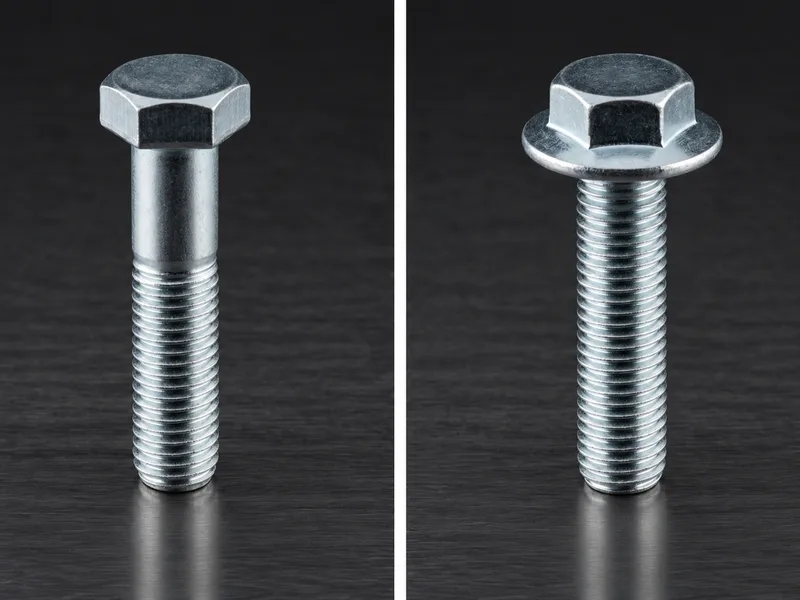
Specifications
Threaded rod in hanger service is sized by its root: the thread cuts the rod down to the root area, and that is what carries the load. The collected table runs 1/4 in to 1-1/4 in diameter in coarse thread: root area from 0.027 in2 at 1/4 in to 0.889 in2 at 1-1/4 in, and a maximum load ladder from 240 lb at 1/4 in through 1130 lb at 1/2 in (the workhorse hanger size) to 8000 lb at 1-1/4 in. The load scale is roughly the root-area scale — same material, same allowable — which makes the table a quick cross-check when a drawing changes rod size: 3/8 in (610 lb) to 1/2 in (1130 lb) is not double the rod, it is almost double the capacity. The asterisk on "Maximum Load" points to a footnote legend that does not survive on the collected page, so the basis (ultimate vs allowable, safety factor) is unverified — treat the ladder as the source's capacity figure and confirm the governing basis against the job's code before it closes a design.
| Material / scope | ASTM A36 steel threaded rod, coarse thread, 1/4 in to 1-1/4 in — capacities as tabulated for pipe support hanger service |
|---|---|
| Root area of coarse thread | 1/4: 0.027 / 3/8: 0.068 / 1/2: 0.126 / 5/8: 0.202 / 3/4: 0.302 / 7/8: 0.419 / 1: 0.552 / 1-1/4: 0.889 in2 |
| Maximum load | 240 lb (1/4) / 610 (3/8) / 1130 (1/2) / 1810 (5/8) / 2710 (3/4) / 3770 (7/8) / 4960 (1) / 8000 lb (1-1/4) — basis flagged: the source's * footnote legend is not carried on the collected page |
| Not tabulated | Fine-pitch rods, other materials (B7, stainless), thread lengths, temperature derating — per RFQ |
Materials
- The ladder is specific to A36 — a B7 rod of the same diameter carries substantially more, and stainless less in the hot condition. Hanger selection usually pairs the rod with its hardware: the rod is often not the weakest link (the nut, the clevis or the beam clamp can be), so size the whole assembly, and state the material grade explicitly when RFQ-ing rod against this table
Ordering & documentation
Documents
Shipments are backed by Mill Test Certificate (MTC), Dimensional Report, Salt Spray Test Report on request, with full batch traceability from raw material to finished product. Quality management follows the owner-confirmed compliance list: ISO 9001:2015, RoHS, REACH. Exact document sets are confirmed on the order.
Quotation
- The fastener family (Steel Threaded Rod Capacities (ASTM A36, Pipe Support Hangers)) plus the standard designation from your drawing — DIN / ISO / JIS / ASTM / ANSI, or a drawing for custom parts.
- Size (diameter and length), thread type (metric or inch), property class or grade, and coating or finish.
- Quantity per size and your target delivery date.
- Destination country, and any required documents (for example a mill test certificate) so the quote includes them.
Sample & supply
Minimum order quantity is 1,000–10,000 pieces depending on size. Stock items run 3–7 days. High-strength and custom parts run 15–25 days. Quantities or variants outside the standard range are confirmed at quotation.
Storage & shipping
Parts are packed for export and shipped factory-direct to buyers in Europe, Asia, the Americas and the Middle East. Store fasteners dry and protected until installation, and keep coated parts in their packaging until use; specific packing and preservation requirements can be stated on the order and confirmed at quotation.
Frequently asked questions
Why is capacity based on the thread root and not the rod diameter?
Because in a threaded assembly the load funnels through the smallest solid section — the root of the thread, where the V-form cuts the effective diameter down. The table shows the arithmetic directly: a 1/2 in rod is 0.196 in2 of gross steel but only 0.126 in2 at the coarse-thread root, about 64%, and every capacity figure follows that ratio. It also explains why fine-pitch thread changes capacity (a shallower root leaves more steel) and why a nut must be fully engaged: an unengaged turn moves the load path onto a partially formed thread. When a hanger calc and the catalog disagree, check which diameter — root vs nominal — each used first.
The table says "Maximum Load*" — can it be used as a design allowable?
Not without knowing the basis. The asterisk's footnote did not survive on the collected page, so whether the figures are ultimate loads with an implied safety factor or allowable working loads is unverified, and the difference is typically a factor of several. Structural and pipe-support codes (MSS, ASCE, the local building code) set their own allowable stresses and required safety factors for hanger rods, and a design allowable has to come from the governing code, not from a catalog maximum. Use the ladder to select candidate sizes and cross-check relative capacities between diameters — then confirm the final number against the code with the safety factor applied, per RFQ where the basis matters.
Related knowledge
- What Bolt Property Classes 8.8, 10.9 and 12.9 Encode — and When High Strength Stops Being the Right Choice
- Bolt Grade Selection: ISO 898-1 8.8/10.9/12.9 vs ASTM A307 and A325
- 8.8 vs 10.9 vs 12.9 Bolts: Strength, Hardness and Cost — What the Evidence Settles
- Calculating Bolt Preload and Clamp Force: Torque, Friction and Tightening Method
- How to Determine Tightening Torque and Choose a Tightening Method for a Bolted Joint
- Fastener Failure Modes: Which Fatigue, Creep and SCC Controls the Evidence Supports
- Hydrogen Embrittlement in High-Strength Bolts: Which Grades Need Controls, Which Coatings and Baking Schedules Are Acceptable, and What to Require Before the RFQ
Request a Quote
Get factory-direct pricing from the manufacturer.
What to include in your inquiry
- ✓ Standard and property class (e.g. DIN 912, ISO 4762, class 8.8) — or a drawing for custom parts.
- ✓ Sizes, lengths and thread type (metric or inch).
- ✓ Quantity per size and your target delivery date.
- ✓ Destination country, plus any coating or finish requirement.
- ✓ Any documents you need with the shipment (e.g. mill test certificate) so the quote includes them.
- ✓ Your inquiry goes straight to the factory team by email and gets a reply within 24 hours.
- ✓ Factory-direct pricing
- ✓ Standard and custom specifications
- ✓ Factory-direct export to buyers in Europe, Asia, the Americas and the Middle East
- ✓ Full fastener family support