
ISO 262 Metric Screw Threads — Selected Pitches for Screws, Bolts and Nuts (M1.6 – M64)
ISO 262 general-purpose metric screw thread pitch selection for M1.6 – M64 — the coarse pitch per nominal size plus the fine-pitch options, with the source's 1st/2nd-choice preferred-size split, transcribed row-for-row.
Last updated: 2026-11
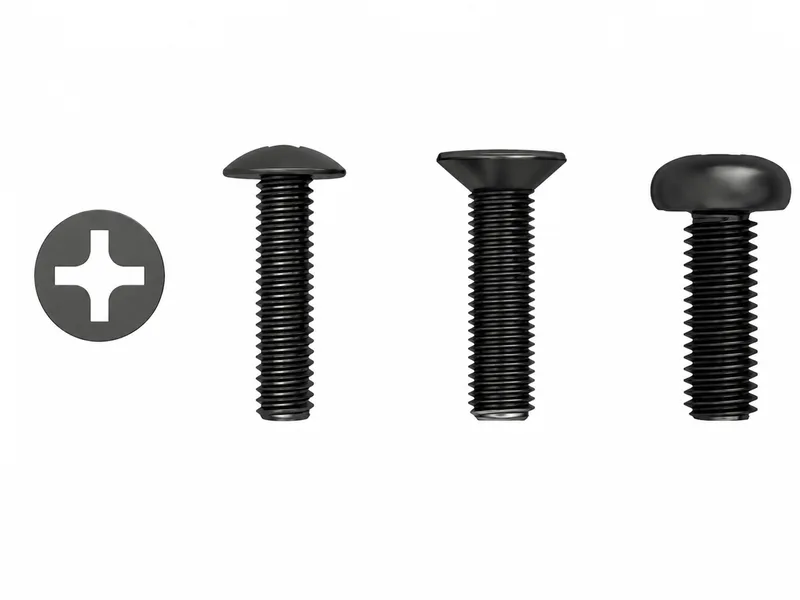
Specifications
ISO 262 is the standard that answers "which pitch goes with which size" for general-purpose metric threads — the selection layer that sits above the tolerance standards (ISO 965) and the thread profile itself. The collected table runs M1.6 through M64 and carries two pieces of structure that matter when ordering metric fasteners. First, the coarse/fine split: every size has exactly one coarse pitch (the default on drawings and in stock — M10 coarse is 1.5, M16 is 2, M30 is 3.5), and sizes from M8 up carry fine options (M10: 1.25 and 1; M20: 2 and 1.5; M24 and up typically one fine pitch) — the fine pitches are the adjustment, vibration and thin-wall answers, ordered only when the drawing names them. Second, the 1st/2nd-choice column split: ISO marks preferred sizes (M1.6, M2, M2.5 … M8, M10, M12, M16, M20, M24, M30, M36, M42 …) against 2nd-choice sizes (M1.8, M3.5, M7, M14, M18, M22, M60) — designing to 1st-choice sizes keeps tooling, taps and gages within the common ladder, and stock depth is correspondingly deeper. A reading note lives in the table footnotes: the source ladder steps M24 directly to M30 with no M27 row. Pitch tolerances and diameter limits are not tabulated by this collected chart — per RFQ; thread-limit charts on this site cover the B1.13M M-profile and DIN 103 trapezoidal systems.
| Standard | ISO 262:1998 — ISO general purpose metric screw threads, selected sizes for screws, bolts and nuts (source note kept: "Selected metric sizes for general engineering use") |
|---|---|
| Size range | M1.6 – M64, twenty-six sizes; 1st-choice ladder M1.6, M2, M2.5, M3, M4, M5, M6, M8, M10, M12, M16, M20, M24, M30, M36, M42, M48, M56, M64; 2nd-choice sizes M1.8, M3.5, M7, M14, M18, M22, M60 |
| Tabulated pitches (mm) | One coarse pitch per size (M1.6: 0.35 … M10: 1.5, M12: 1.75, M16: 2, M20: 2.5, M24: 3, M30: 3.5, M36: 4, M64: 6) plus fine options from M8 up as printed (M8: 1; M10: 1.25/1; M12: 1.5/1.25; M20: 2/1.5; M30: 2; M64: 4) |
| Reading notes | Empty pitch cells are fine-pitch options the source does not offer for that size; the ladder omits M27 between M24 and M30 (see table footnote) |
| Tolerances / diameter limits | Not tabulated by this collected chart — per RFQ (M-profile limits: see the ASME B1.13M page in this catalog) |
| Nominal Diameter (1st choice) | Nominal Diameter (2nd choice) | Pitch P — coarse | Pitch P — fine (col 1) | Pitch P — fine (col 2) |
|---|---|---|---|---|
| M1.6 | 0.35 | |||
| M1.8 | 0.35 | |||
| M2 | 0.4 | |||
| M2.5 | 0.45 | |||
| M3 | 0.5 | |||
| M3.5 | 0.6 | |||
| M4 | 0.7 | |||
| M5 | 0.8 | |||
| M6 | 1 | |||
| M7 | 1 | |||
| M8 | 1.25 | 1 | ||
| M10 | 1.5 | 1.25 | 1 | |
| M12 | 1.75 | 1.5 | 1.25 | |
| M14 | 2 | 1.5 | ||
| M16 | 2 | 1.5 | ||
| M18 | 2.5 | 2 | 1.5 | |
| M20 | 2.5 | 2 | 1.5 | |
| M22 | 2.5 | 2 | 1.5 | |
| M24 | 3 | 2 | ||
| M30 | 3.5 | 2 | ||
| M36 | 4 | 3 | ||
| M42 | 4.5 | 3 | ||
| M48 | 5 | 3 | ||
| M56 | 5.5 | 4 | ||
| M60 | 5.5 | 4 | ||
| M64 | 6 | 4 |
- Row 24 (M56): The M30 row in the collected table follows the M24 row directly with no M27 row — the source's selected-sizes ladder omits M27; kept as printed.
Materials
- Pitch, class and diameter limits are drawing-level decisions — order fasteners by size x pitch x class; stock depth is deepest on the 1st-choice size ladder
Ordering & documentation
Documents
Shipments are backed by Mill Test Certificate (MTC), Dimensional Report, Salt Spray Test Report on request, with full batch traceability from raw material to finished product. Quality management follows the owner-confirmed compliance list: ISO 9001:2015, RoHS, REACH. Exact document sets are confirmed on the order.
Quotation
- The fastener family (ISO 262 Metric Screw Threads — Selected Pitches for Screws, Bolts and Nuts (M1.6 – M64)) plus the standard designation from your drawing — DIN / ISO / JIS / ASTM / ANSI, or a drawing for custom parts.
- Size (diameter and length), thread type (metric or inch), property class or grade, and coating or finish.
- Quantity per size and your target delivery date.
- Destination country, and any required documents (for example a mill test certificate) so the quote includes them.
Sample & supply
Minimum order quantity is 10,000 pieces. Stock items run 3–7 days. Quantities or variants outside the standard range are confirmed at quotation.
Storage & shipping
Parts are packed for export and shipped factory-direct to buyers in Europe, Asia, the Americas and the Middle East. Store fasteners dry and protected until installation, and keep coated parts in their packaging until use; specific packing and preservation requirements can be stated on the order and confirmed at quotation.
Frequently asked questions
Coarse or fine pitch for a metric fastener — and why does the 1st/2nd-choice size split matter for ordering?
For pitch: default to coarse unless something specific pushes the other way. The coarse pitch (the unmarked default, M10 = 1.5, M16 = 2) assembles faster, tolerates dirt and handling, strips less easily in lower-strength materials and is what distributors stock deepest — the collected table gives every size exactly one coarse pitch and only offers fine pitches from M8 up. The fine pitches earn their place in four situations: vibration-critical clamping (finer pitch's shallow helix resists backing off), adjustment mechanisms (each turn moves the joint less), thin walls (a fine thread fits full form into less wall thickness), and high-strength bolts where the larger core diameter of a fine thread buys tensile capacity. Order fine only when the drawing or the joint names it — a fine-pitch bolt in a coarse-tapped hole is the classic mixing error. For size choice: the 1st/2nd-choice split is an economics signal. 1st-choice sizes (M10, M12, M16, M20 …) are the ladder taps, gages and stock are built around; 2nd-choice sizes (M14, M18, M22 …) exist for when a design genuinely needs the intermediate step, and lead times and stock depth reflect that thinner ecosystem. New designs should stay on the 1st-choice ladder; conversions of existing hardware should honor whatever the mating parts already are.
What is the MOQ and lead time for threaded parts on this standard?
The minimum order quantity is 10,000 pieces. Stock items ship in 3–7 days; non-stock items are confirmed at quotation. Common thread sizes on this standard are widely stocked; confirm the exact schedule against quantity and size mix at quotation.
Related knowledge
- Thread-Forming vs Thread-Cutting vs Thread-Rolling Self-Tapping Screws: What the Evidence Settles on Base Material
- Screw Family Selection by Base Material: Wood, Machine and Self-Tapping Threads, Engagement and Coating
- Hex Bolts vs Socket Head Cap Screws: What the Evidence Settles on Strength, Clearance and Cost
Request a Quote
Get factory-direct pricing from the manufacturer.
What to include in your inquiry
- ✓ Standard and property class (e.g. DIN 912, ISO 4762, class 8.8) — or a drawing for custom parts.
- ✓ Sizes, lengths and thread type (metric or inch).
- ✓ Quantity per size and your target delivery date.
- ✓ Destination country, plus any coating or finish requirement.
- ✓ Any documents you need with the shipment (e.g. mill test certificate) so the quote includes them.
- ✓ Your inquiry goes straight to the factory team by email and gets a reply within 24 hours.
- ✓ Factory-direct pricing
- ✓ Standard and custom specifications
- ✓ Factory-direct export to buyers in Europe, Asia, the Americas and the Middle East
- ✓ Full fastener family support